
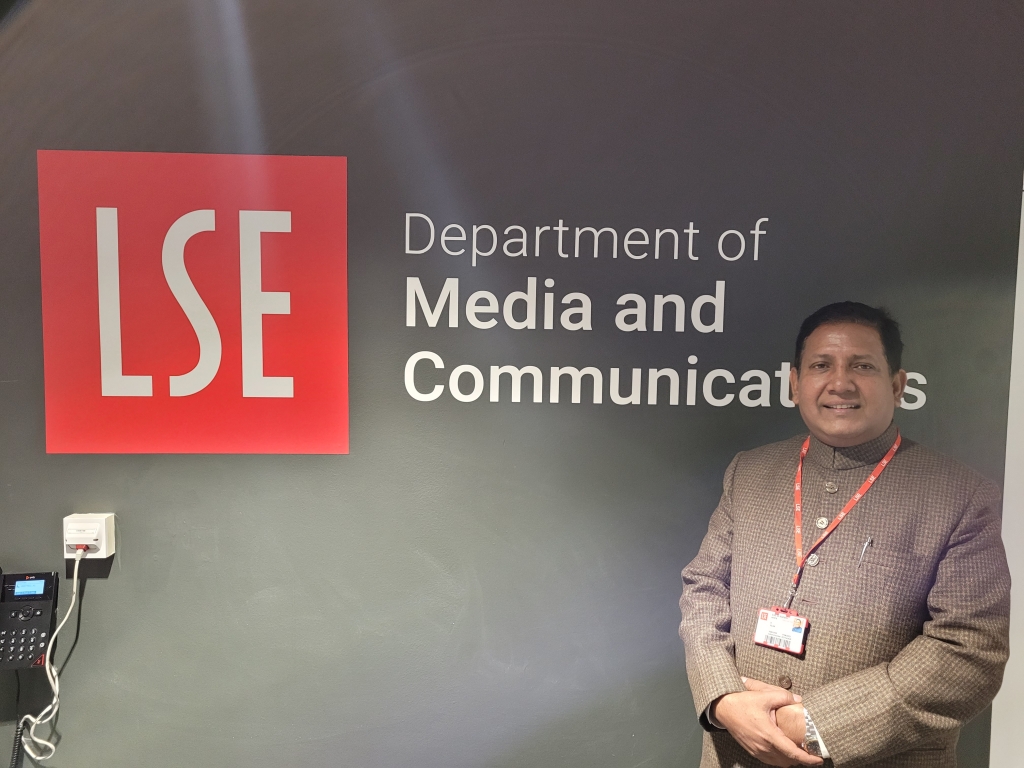
Forging Global Media Leaders at the Heart of London
The London School of Economics and Political Science offers a profoundly different approach to media studies. It is a world-renowned institution where journalism and communication are examined not merely as crafts, but as powerful forces shaping society, politics, and global culture. For aspiring media professionals who seek to understand the ‘why’ behind the ‘what’, LSE’s Department of Media and Communications provides an unparalleled intellectual foundation.
- University: The London School of Economics and Political Science (LSE)
- Flagship Program: MSc in Media and Communications
- Location: London, United Kingdom
- Focus of Training: Critical analysis, research-led theory, and understanding the societal impact of media.
- Key Distinction: Ranked #1 in the UK and #3 globally for Communication and Media Studies (QS World University Rankings 2023).
- Application Link: LSE Department of Media and Communications
The LSE Philosophy: A Social Science Approach to Media
The Department of Media and Communications at LSE is built on the university’s core identity as a leading social science institution. The training here is less about learning to operate a camera and more about deconstructing the power structures that media systems create and sustain. Established in 2003, the department has rapidly become a global leader, attracting students and faculty dedicated to critical, interdisciplinary, and comparative approaches to media.
Critical Thinking over Technical Skills
Unlike vocational journalism schools, LSE’s curriculum prioritizes theoretical understanding and analytical rigor. Students learn to critique media policy, analyze digital culture, and investigate political communication with academic precision. The goal is to produce graduates who are not just practitioners but also strategists, policymakers, and thought leaders capable of navigating and shaping the future of the global media landscape.
London as a Living Classroom
LSE’s location in central London places students at the epicentre of global media, finance, and politics. This unique position provides an immersive learning environment where classroom theories can be observed in action just steps from the campus. Proximity to organizations like the BBC, The Guardian, Reuters, and numerous regulatory bodies offers unmatched opportunities for networking, internships, and research.
Flagship Programme: Deep Dive into the MSc in Media and Communications
The one-year, full-time MSc in Media and Communications is the department’s flagship postgraduate program, attracting a diverse international cohort each September. It is designed to provide a comprehensive understanding of the development and forms of media and communications in relation to political economy, regulation, and social and cultural change.
Core Curriculum and Specialist Pathways
The curriculum ensures all students gain a solid theoretical and methodological grounding before pursuing their specific interests. The structure provides both depth and breadth, with over 90% of graduates finding employment or further study within 15 months of completion.
- Compulsory Courses: These typically include ‘Theories and Concepts in Media and Communications’ and ‘Methods of Research in Media and Communications’, which form the intellectual backbone of the degree.
- Optional Courses: Students can tailor their studies with a wide range of options like ‘Digital Platforms and Media Infrastructures’, ‘Media and Globalisation’, ‘Audiences, Users and Platforms’, ‘The Politics of Data’, and ‘Strategic Communication in Practice’.
The Dissertation: A Capstone Research Project
The programme culminates in a 12,000-word independent research project. The dissertation allows students to conduct an in-depth investigation into a topic of their choice under the guidance of a faculty supervisor. This is a crucial component that showcases a student’s analytical and research capabilities, often serving as a significant piece of work for future academic or professional pursuits.
A Hub of World-Leading Research
What truly sets the LSE experience apart is its research-led teaching. You are taught by scholars whose work is cited by governments, influences policy, and defines academic fields. The department’s research was rated overwhelmingly as ‘world-leading’ or ‘internationally excellent’ in the UK’s most recent Research Excellence Framework (REF 2021).
Influential Faculty and Their Specialisms
The faculty comprises internationally recognized experts in areas such as digital privacy, media regulation, political communication, and global media cultures. This direct access to leading thinkers ensures the curriculum is constantly evolving and always at the forefront of contemporary debates. While LSE provides the critical framework, students often supplement their learning with practical guides to master digital communication, bridging powerful theory with industry application.
Career Trajectories and Alumni Network
An LSE degree is a globally recognized mark of academic excellence. Graduates from the Department of Media and Communications are highly sought after in a variety of sectors, leveraging their analytical skills and deep understanding of the media environment.
From LSE to Global Careers
Alumni embark on diverse career paths, with common destinations including:
- Media and Tech Industries: Roles in strategy, research, and management at companies like Google, Meta, the BBC, and Condé Nast.
- Policy and Regulation: Positions in government departments, NGOs, and regulatory bodies such as Ofcom.
- Academia: Pursuing PhDs and academic careers at top universities worldwide.
- Consulting and Research: Working as analysts and consultants for firms focusing on media trends and digital strategy.
Navigating the Competitive Admissions Process
Gaining admission to an LSE master’s program is highly competitive. The university seeks candidates with a strong academic background, a clear sense of purpose, and a passion for the social scientific study of media. The application process is holistic, considering all parts of your submission.
Academic and Professional Requirements
Successful applicants typically possess:
- A first-class or high upper second-class honours (1st or 2:1) undergraduate degree in a social science discipline or another field with a significant analytical component.
- A strong command of the English language (evidenced by standardized tests if required).
- While not mandatory, relevant professional experience can strengthen an application.
Crafting a Compelling Application
Your personal statement is the cornerstone of your application. It must articulate not only why you want to study media and communications, but specifically why you want to do so at LSE. You should demonstrate a clear understanding of the department’s critical, research-led approach and explain how your academic and professional goals align with the program’s philosophy.









Leave A Comment