
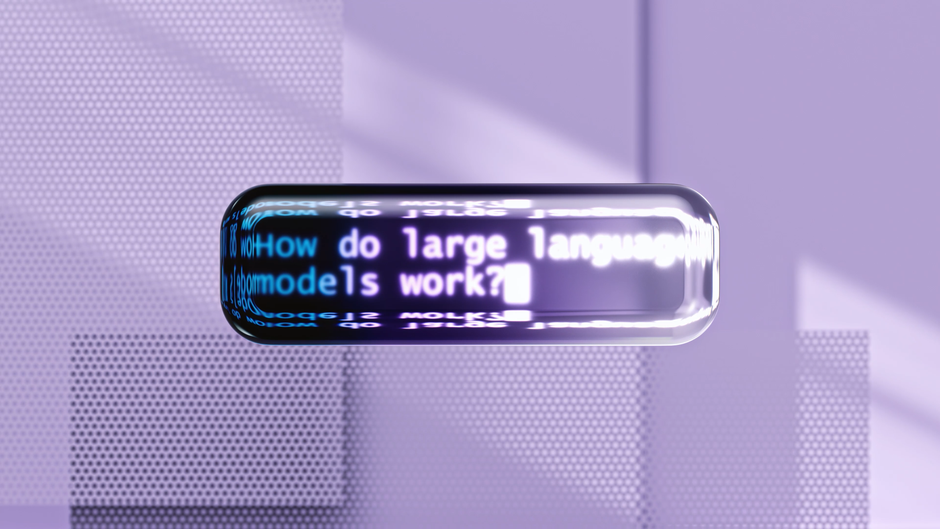
The End of Prompt Engineering As We Know It
The marketing team stared at the blank screen, defeated. For an hour, they had been wrestling with the AI image generator, trying to craft the perfect prompt. “A diverse group of professionals collaborating in a sun-drenched, modern office, photorealistic, 8K, happy but not cheesy.” Each attempt produced a surreal nightmare of extra limbs and vacant smiles. This frustrating cycle of trial and error, the hallmark of our first encounters with generative AI, is rapidly becoming obsolete. The very nature of our interaction with artificial intelligence is undergoing a fundamental transformation, moving from tedious instruction to strategic partnership.
These seven shifts are at the forefront of this evolution:
- From Prompts to Goals: We’re shifting from telling AI what to do to telling it what we want to achieve.
- Persistent Conversations: AI is developing long-term memory, recalling past projects and preferences.
- Voice as the Default: Natural language speech is becoming the most efficient way to interact with AI.
- Coordinated Agent Teams: We are now orchestrating teams of specialized AIs that work together.
- Strategic Cost Management: Choosing the right model for the right task is a new core competency.
- Shared Team Agents: Collaborative AI instances are becoming central hubs for team projects.
- Proactive Assistance: AI is beginning to anticipate needs and act autonomously.
From Isolated Prompts to Ambitious Goals
The initial paradigm of AI was instructional. We gave it a command; it gave us an output. This is now giving way to a more powerful, goal-oriented approach. Instead of asking an AI to “write a blog post about Q3 earnings,” we can now task it with, “Analyze our Q3 performance data, identify three key insights for investors, and draft a blog post, a shareholder email, and a series of social media updates based on those insights.” This shift changes how we use AI from a simple tool into a strategic project manager. Experts find this dramatically reduces the time spent on manual coordination and information synthesis, which a McKinsey report estimates consumes nearly 20% of the average knowledge worker’s week.
Practical Implications
- Old Method: A series of disconnected, single-task prompts.
- New Method: A single, high-level objective that the AI deconstructs and executes.
- Result: Increased efficiency and more complex, higher-value output.
The Dawn of Persistent, Contextual Conversations
One of the most significant limitations of early chatbots was their “goldfish memory.” Each interaction was a fresh start, forcing users to repeat context and instructions endlessly. That era is over. Modern AI systems are being built with persistence at their core, creating a continuous, evolving conversation. An AI can now remember your company’s specific brand voice, the key stakeholders on a project you discussed two weeks ago, and even your preferred communication style. This fosters a more natural and efficient partnership. A Zendesk study found that over 70% of customers expect conversational service where they don’t have to repeat themselves—a standard now coming to our professional tools.
The Power of Shared Memory
This persistent context isn’t just for individual users. When deployed for teams, a shared AI agent can become a living repository of project knowledge, decisions, and history, dramatically reducing onboarding time for new members and ensuring everyone is working from the same information.
Voice Becomes the Primary AI Interface
Typing is a bottleneck. The human brain can formulate thoughts far faster than our fingers can translate them to a keyboard. As AI models become more responsive and conversational, voice is emerging as the most intuitive and efficient interface. Recent demonstrations from major tech labs showcase AI assistants capable of real-time vocal conversation, detecting nuance and emotion, and acting as a seamless collaborator. This is more than just dictation; it’s a fluid dialogue. Research from PwC indicates a strong consumer preference for this modality, with 71% favoring voice search over typing. Adapting to voice-first workflows will be essential to harnessing these new capabilities.
Taking the next step becomes straightforward when you have the right support — Become an Ultimate Master of your life is worth exploring.
Why Voice is Winning
- Speed: We can speak approximately 150 words per minute, compared to the average typing speed of 40 words per minute.
- Multitasking: Voice allows for hands-free operation, enabling AI use while performing other tasks.
- Accessibility: It provides a more natural and accessible interface for a wider range of users.
Orchestrating Teams of Specialized AI Agents
Perhaps the most profound shift is the move from using a single, monolithic AI model to orchestrating a team of specialized AI agents. Instead of relying on one general-purpose AI to do everything, we can now deploy a ‘manager’ agent that delegates tasks to other AIs with specific skills. For example, to launch a product, a manager agent could assign a research agent to analyze the market, a creative agent to generate ad copy and visuals, and a data agent to track performance metrics. This approach leverages the unique strengths of different models for a superior final result.

The Rise of the AI Manager
Our role transforms from a micro-manager writing prompts to a director setting the strategy and overseeing a team of digital specialists. This allows for greater complexity and scale in the projects we can accomplish with AI assistance.
Strategic Cost Management Becomes a Core Competency
Not all AI models are created equal, and neither are their costs. The most powerful models, capable of complex reasoning, are significantly more expensive to run than smaller, faster models designed for simple tasks like summarization or classification. This introduces a new strategic layer to using AI: cost-performance optimization. The new core competency is not just getting a result, but getting it with the most appropriate and cost-effective tool. It means knowing when to use a ‘sledgehammer’ model and when a ‘finishing hammer’ will suffice.
Choosing the Right Tool for the Job
This involves assessing the value and complexity of a task and matching it to a corresponding AI model. Using a top-tier model to summarize internal meeting notes is inefficient, while using a basic model for a critical financial forecast is risky. This economic discipline will separate amateur users from professional operators.
Shared Team Agents as Collaborative Hubs
While persistent memory enhances individual productivity, shared team agents are set to revolutionize collaboration. Imagine an AI integrated into a team’s communication channel that doesn’t just store conversations but understands them. This agent becomes a central, interactive hub for all project-related knowledge. It can answer questions like, “What was the final decision on the Q4 budget?” or “Summarize the key action items from last week’s client call.”
Breaking Down Information Silos
This central AI teammate ensures everyone is working from the most current information, drastically reducing the time spent searching for documents or asking colleagues for updates. It creates a single source of truth that evolves with the project, making teamwork more transparent and efficient.
The Shift from Reactive to Proactive Assistance
The final shift moves AI from a passive tool that waits for commands to a proactive partner that anticipates needs. By having access to your calendar, emails, and project documents, a future AI assistant could automatically prepare you for your day. It might, for example, summarize the key documents and recent email threads related to your 9 AM meeting, draft a preliminary agenda, and flag a potential scheduling conflict you overlooked. This is not just about automation; it’s about anticipatory intelligence.
Anticipatory Intelligence in Action
This proactive support system will act as a cognitive co-pilot, helping us manage complexity and focus on the most critical tasks. Instead of asking the AI for help, the AI will offer help before we even know we need it, fundamentally changing our daily workflow.
The New Human-AI Partnership
These seven shifts signal a maturation in our relationship with artificial intelligence. We are moving beyond the novelty of generating text and images to integrating AI deeply into our workflows as a strategic partner. The focus is shifting from the mechanics of the prompt to the clarity of the goal. In this new era, the most effective professionals will not be prompt engineers, but skilled orchestrators, strategists, and collaborators who know how to lead teams of both humans and intelligent agents to achieve ambitious outcomes.










Leave A Comment