

The AI Landscape Just Got a Lot More Interesting
For what felt like an eternity, the generative AI conversation was a two-horse race. You were either in the OpenAI camp or the Google camp, with a few other notable players on the sidelines. That era is decisively over. The recent launch of xAI’s Grok 4.6 isn’t just another model release; it’s a powerful signal that the market is fracturing into a vibrant, competitive ecosystem, giving users unprecedented choice and power.
Quick Summary
- The End of the Duopoly: The dominance of a few major labs is being challenged by a new wave of powerful, efficient, and cost-effective AI models.
- Grok 4.6 as a Catalyst: xAI’s latest model exemplifies this trend, offering a compelling blend of high speed, strong capability, and dramatically lower costs than its primary competitors.
- A Market in Bloom: Competition is surging not just from corporate labs like xAI and Anthropic, but also from international developers and a robust open-weight model community.
- User-Centric Benefits: This explosion in choice directly benefits individuals and businesses through lower prices, specialized models for specific tasks, and reduced vendor lock-in.
The Cracks in the AI Duopoly
The AI world has been operating under a de facto duopoly for the past few years. While impressive, this concentration of power limited the AI options available to developers and businesses, often forcing them into a one-size-fits-all solution that was either too expensive or too slow for their specific needs. In 2023, two companies captured over 80% of the generative AI market share, creating a powerful gravitational pull around their ecosystems.
We are now witnessing a fundamental shift. The release of models like Grok 4.6, alongside formidable contenders from Anthropic (the Claude 3 family) and others, represents a market correction. It’s a move away from a single “best” model toward a diverse toolkit where different models excel at different things. The new benchmarks aren’t just raw intelligence, but a complex balance of speed, cost, and context window.
Grok 4.6: A New Contender Enters the Ring
What makes Grok 4.6 so significant is how it attacks the market’s weak points. While flagship models have been pushing the boundaries of pure reasoning, they often come with high latency and costs. In real-world applications, responsiveness is often as critical as intelligence. xAI’s Grok 4.6 is engineered to compete on this new axis of performance, offering a compelling alternative for a huge swath of AI-powered applications.

Taking the next step becomes straightforward when you have the right support — Become an Ultimate Master of your life is worth exploring.
Redefining Performance: Speed, Cost, and Capability
The value proposition of Grok 4.6 is crystal clear when you look at the numbers. It’s not just slightly cheaper; it’s an order-of-magnitude shift in the cost-to-capability ratio for certain tasks. This allows developers to build applications that were previously economically unviable. Consider this breakdown:
- Cost-Effectiveness: Early benchmarks suggest Grok 4.6 can be significantly less expensive per million tokens than leading competitors for comparable tasks, potentially reducing API bills by 40-60%.
- Low Latency: Speed is a feature. For applications like real-time customer service bots, content summarization, or interactive coding assistants, low latency is non-negotiable. Grok 4.6 is built for this.
- Strong Capability: While it may not top every single academic benchmark, it delivers high-level performance on a wide range of practical tasks, from coding to creative writing.
These new AI models force a re-evaluation of what “best” means. The best model is no longer the one with the highest score, but the one that best fits the unique constraints of your project.
A Cambrian Explosion of AI Innovation
Grok 4.6 is a symptom of a much larger trend: a global explosion in AI development. The massive funding rounds we’re seeing are fueling a hyper-competitive environment. This investment is pouring into every corner of the ecosystem, from foundational model research to the booming demand for AI infrastructure like data centers and GPUs.
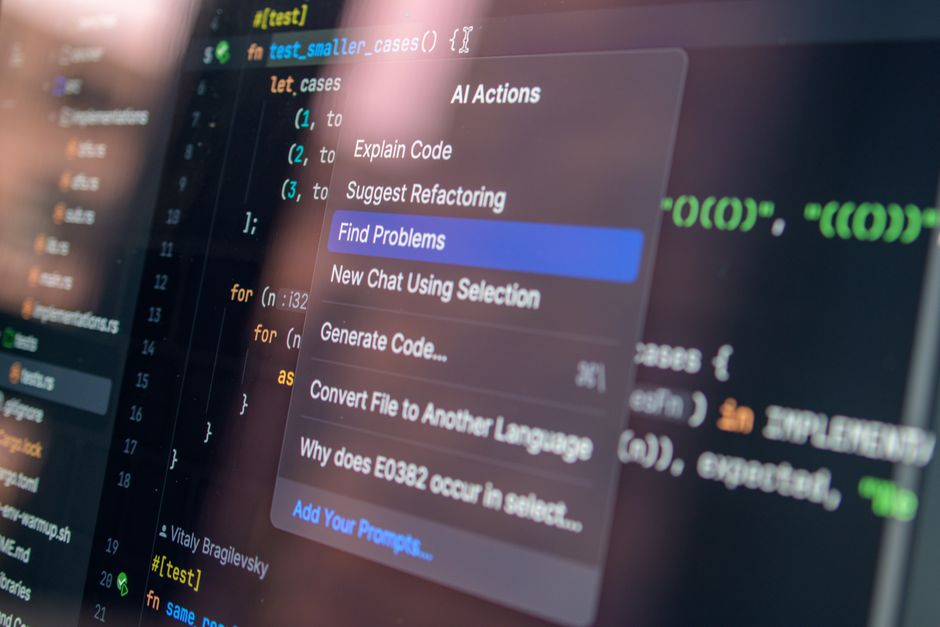
We’re moving from a monolithic AI world to a microservices AI world. Instead of relying on one giant brain for everything, smart developers are now routing specific tasks to the most efficient, fastest, or most creative model for that particular job. It’s about building a portfolio of AI tools, not relying on a single asset.
The Rise of Open-Weight Challengers
Perhaps the most powerful democratizing force is the open-weight model community. Led by players like Meta with its Llama series and France’s Mistral AI, these models provide an unprecedented level of control and customization. Businesses can fine-tune them on proprietary data and run them on their own infrastructure, ensuring data privacy and creating highly specialized solutions without paying per-token API fees. This movement is a critical counterbalance to the closed, proprietary systems of the largest labs.
The Multi-Model Strategy: A New Best Practice
The smartest teams are no longer asking “Which model is best?” but “Which model is best for this specific task?” This leads to a multi-model or “model routing” strategy, where an application intelligently delegates work to the most appropriate AI based on complexity, speed requirements, and cost.
| Task Type | Recommended Model Category | Key Benefit |
|---|---|---|
| Real-time Chat & Summarization | Low-latency (e.g., Grok 4.6, Claude 3 Sonnet) | Speed, User Experience |
| Complex Data Analysis & Strategy | High-reasoning (e.g., GPT-4, Claude 3 Opus) | Accuracy, Depth |
| Internal Tooling & Data Privacy | Open-weight (e.g., Llama 3, Mistral Large) | Cost, Customization |
What This Means For You
This fragmentation of the market is overwhelmingly positive for anyone using or building with AI.
- For Developers: You now have the freedom to escape vendor lock-in. You can optimize your applications for performance and cost with surgical precision, building products that were previously too slow or expensive to be viable.
- For Businesses: You can gain a competitive advantage by leveraging specialized models for your specific industry. Lower operational costs for AI features and greater data privacy through open-weight models are now on the table.
- For End Users: The ultimate result is a wave of better, faster, and more affordable AI-powered products. Expect more niche, personalized, and responsive applications to become the norm as the cost of intelligence plummets.










Leave A Comment