

Introduction: The Dawn of a New Economic Era
The digital ground is shifting beneath our feet. What began as a niche academic pursuit has erupted into a full-blown economic supercycle, a tsunami of capital, compute power, and human ingenuity that is reshaping every industry it touches. We are living through the birth of a new economy, one built on algorithms and data, and its scale is already staggering. This is not a distant forecast but a present-day reality, a digital gold rush creating new markets and challenging old paradigms at an unprecedented speed.
Quantifying the Gold Rush: A $175 Billion Market
It’s a number so large it’s difficult to conceptualize. According to recent analysis, the economic activity centered on AI is currently operating at a $175 billion annual run rate. This colossal figure represents the combined global spending on the hardware, software, and services that power the artificial intelligence revolution. This financial momentum is not concentrated in one area but represents a complex ecosystem where value flows between different layers of the technology stack.
The Foundational Layer: Infrastructure and Compute
A significant portion of this revenue is captured by companies providing the raw materials of the digital age: cloud computing power and specialized chips. Technology giants like Amazon Web Services, Microsoft Azure, and Google Cloud supply the vast server infrastructure, while hardware innovators like NVIDIA produce the Graphics Processing Units (GPUs) that have become the essential workhorses for training and running complex models. This layer forms the bedrock upon which the entire AI economy is built.

The Intelligence Layer: Foundation Model Development
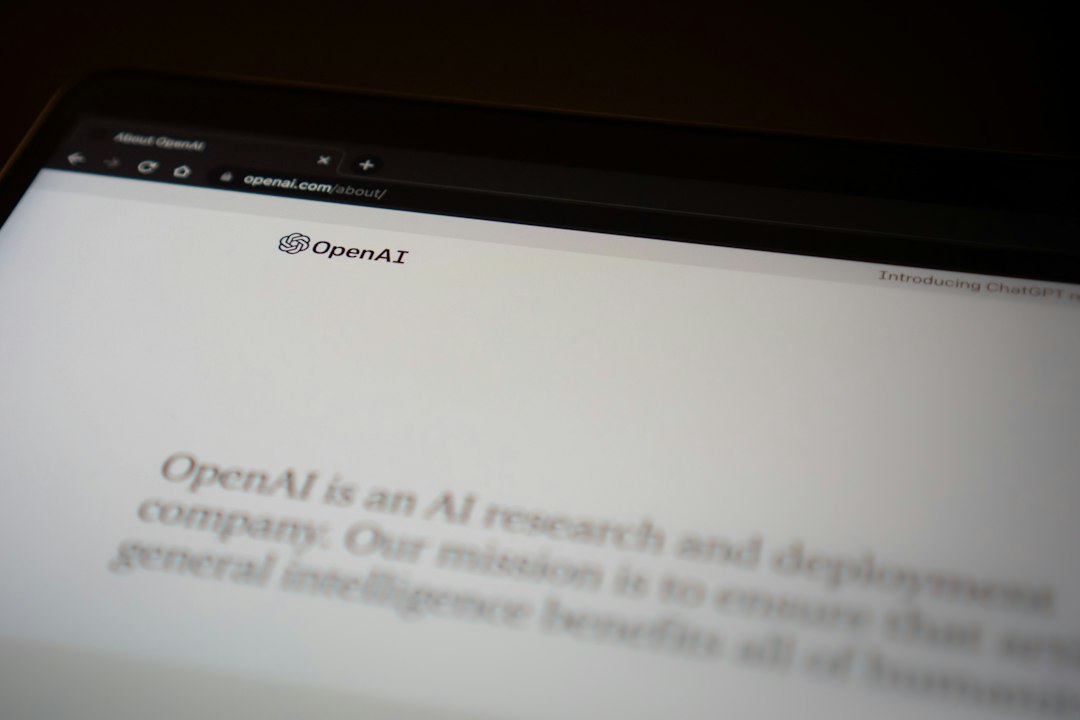
At the next level are the firms developing the large-scale, general-purpose AI that serve as the brains for countless applications. Companies like OpenAI, Anthropic, and Google are investing billions of dollars in the monumental task of training these foundation models. This is a capital-intensive race for cognitive supremacy, where breakthroughs can redefine the capabilities of artificial intelligence overnight and set the direction for the entire industry.
The Application Layer: Where AI Meets the User
The fastest-growing and most diverse segment is the application layer. This is where the raw power of foundation models is harnessed to create tangible tools and services. From startups creating AI-powered assistants for software developers to established enterprises deploying algorithms to optimize supply chains, this layer represents a Cambrian explosion of innovation. It is here that AI transitions from abstract technology to a practical utility impacting daily work and life.
The Engine of Growth: The Compute Supercycle
Behind the $175 billion headline is a powerful engine: the compute supercycle. This phenomenon is defined by two opposing yet complementary forces. First, the demand for AI processing, often measured in units called “tokens,” is surging exponentially as models become more capable. Simultaneously, the cost per unit of computation, or the price per token, is plummeting. This dynamic mirrors previous technological revolutions, such as the explosion of data storage where the falling cost per gigabyte unlocked entirely new possibilities.
For those looking to take the next step, Become an Ultimate Master of your life is a resource worth exploring.

The Token Economy Explained
In the world of Large Language Models (LLMs), a token is a basic unit of text, roughly equivalent to a word or part of a word. Every query sent to an AI and every response it generates is measured in tokens. As the price for processing these tokens drops, in some cases by over 70% in a single year, the barrier to entry for building sophisticated AI products lowers significantly.
Implications of the Deflationary Token
The falling cost of tokens is a primary catalyst for innovation, with several key consequences:
- Increased Sophistication: Developers can now afford to build applications that require longer contexts and more intricate, multi-step reasoning that was previously cost-prohibitive.
- Wider Accessibility: Startups and individual developers can experiment with state-of-the-art models without needing massive budgets, democratizing the ability to create cutting-edge technology.
- Accelerated Innovation: The ability to process billions of tokens affordably means more people can build, test, and deploy AI solutions, dramatically increasing the overall pace of discovery and development.
Navigating the New Frontier: Access, Control, and Identity
As the value of the AI ecosystem grows, so do the questions around who gets to participate. A critical tension is emerging between the ideals of open access and the need for security and control. Recent debates around identity-verified access systems for advanced models highlight this challenge. On one hand, verifying user identity can curb malicious use, enhance security, and create accountability. On the other, it raises significant concerns about privacy, data collection, and the potential to create a tiered system of AI access, locking out those who are unable or unwilling to provide identity verification.
The Watchful Eye: Regulation and Governance on the Horizon
The sheer scale and societal impact of the AI economy have captured the attention of lawmakers globally. Washington and other regulatory bodies are now drafting new rules aimed at creating a framework for responsible AI development and deployment. Two key concepts are emerging at the forefront of these discussions.
The Principle of Agent Neutrality
Regulators are exploring rules targeting “agent neutrality.” This principle would require AI systems to act without hidden biases or undeclared commercial incentives that might conflict with a user’s stated goals. The aim is to ensure transparency and prevent AI agents from subtly manipulating users for the benefit of the platform’s creator.
Establishing a Duty-of-Loyalty
An even more profound proposal is the creation of a “duty-of-loyalty” for certain AI systems. This would legally obligate an AI to act in the best interests of its user, much like the fiduciary duty a lawyer has to a client. Implementing such a standard would be complex but would represent a fundamental step in aligning advanced AI with human welfare.
From Experiment to Enterprise: AI’s Corporate Integration
The AI market is rapidly maturing, transitioning from a phase of speculative experimentation to one of deep enterprise integration. Shifting corporate and state contracts signal that AI is now viewed as an essential utility, not just a novelty. Companies are moving beyond small-scale pilot projects to sign large, multi-year contracts that embed AI into their core operations. This transition marks a crucial step in the long-term sustainability of the AI economy, proving its value in delivering measurable efficiency gains, cost savings, and new revenue streams.
Conclusion: The Road Ahead in the AI Economy
The $175 billion AI economy is more than just a statistic; it is a sign of a fundamental economic realignment. Fueled by a powerful compute supercycle, this new digital gold rush is creating immense wealth and opportunity. However, it also brings profound challenges related to access, control, and governance. As AI becomes further embedded in our businesses and societies, the next chapter will be defined not just by technological advancement, but by our collective ability to build a framework that ensures this powerful new force acts as a safe and equitable engine for human progress.








Leave A Comment