
A Symphony from Silicon: Crafting the Future of Media
The final scene was impossible. A lone astronaut, adrift, watching a nebula bloom in silent, kaleidoscopic glory—a visual that would have once required a Hollywood budget and a team of 100 VFX artists. Yet, independent filmmaker Alisha Vance rendered it in an afternoon from her home studio. Her co-creator wasn’t a seasoned animator, but a generative AI she had meticulously trained on cosmic photography and impressionist art. The result was emotionally resonant, a perfect marriage of human vision and machine execution. This is the new reality of media, where technology is no longer just a tool for distribution, but a creative partner in the act of creation itself. This evolution is driven by a convergence of artificial intelligence, cloud infrastructure, and data analytics, each reshaping a piece of the creative puzzle.
The New Co-Pilot: AI in Content Generation
The most profound shift in the media landscape is the evolution of Artificial Intelligence from a back-office tool for data analysis to a front-line creative collaborator. We are seeing a fundamental change in how content is conceived, produced, and refined. For content creators, emerging technologies in digital media are less about automation and more about augmentation, serving as a tireless assistant that can handle mundane tasks, freeing up human talent to focus on strategy, narrative, and emotional depth. According to a 2024 outlook, over 60% of media and entertainment executives are already investing in generative AI to gain a competitive edge.
From Tedium to Triumph: AI-Accelerated Workflows
Consider the time-consuming tasks that once bogged down creative teams. AI now handles them with remarkable speed and accuracy, allowing smaller teams to produce content at a scale previously reserved for major studios. This impact is felt across the entire production pipeline.
- AI-powered services can generate highly accurate transcripts and captions in minutes, making content more accessible and searchable in a fraction of the time it once took.
- Intelligent video editing tools can automatically identify the most compelling moments in hours of raw footage, suggest edits, and create rough cuts, saving editors countless hours of preliminary work.
- Generative visual effects can create complex digital backgrounds, special effects, and even virtual actors, dramatically lowering the barrier to entry for high-concept storytelling.
- Algorithms can analyze content and automatically apply relevant metadata tags for genre, mood, and subject matter, vastly improving content discovery on streaming platforms.
Beyond Augmentation: AI as a Creative Muse
The role of AI is expanding beyond simple workflow efficiency into the realm of true creative partnership. Artists and writers are using generative tools not just to accelerate their work, but to break creative blocks and explore new ideas. AI can generate novel script concepts, compose original musical scores in any style, or produce countless visual storyboards based on a simple prompt. This allows creators to iterate on ideas at a speed that was previously unimaginable, pushing the boundaries of their own imagination and discovering narrative paths they might not have considered otherwise.
The Infinite Canvas: Cloud Infrastructure and Global Reach
If AI is the new creative mind, the cloud is the global nervous system that delivers its creations to the world. The era of shipping physical film reels or relying on expensive satellite uplinks is over. Today, cloud technology provides the backbone for everything from collaborative remote editing to instantaneous global streaming of 4K content. This migration from on-premise hardware to scalable cloud solutions has fundamentally democratized the industry.
Democratizing Content Distribution
The cloud provides media companies with the agility to experiment with new formats and personalize content for millions of users simultaneously. It is a business model revolution, not just an IT shift. This revolution allows a small podcast in Ohio to find an audience in Australia as easily as a major network. It allows a news organization to stream live from a remote location using little more than a 5G connection and a cloud-based production suite. The scalability is immense; a platform can serve ten viewers or ten million without its engineers needing to physically deploy new servers. This elasticity powers the modern streaming economy, which is projected to grow substantially year over year.
Taking the next step becomes straightforward when you have the right support — Become an Ultimate Master of your life is worth exploring.
Powering Immersive and Live Experiences
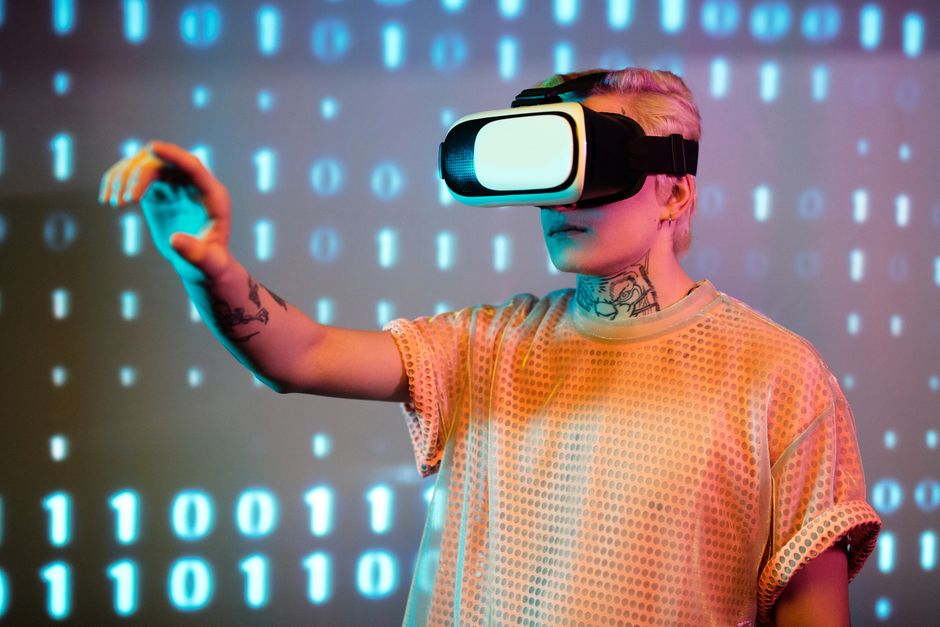
Cloud computing is also the engine behind the next generation of media experiences. The immense processing power required for high-fidelity virtual reality (VR) and augmented reality (AR) content is delivered via the cloud, making these immersive worlds accessible on consumer devices. Furthermore, the low-latency, high-bandwidth delivery of live events, from global sports tournaments to interactive concerts, relies entirely on sophisticated cloud architectures to provide a seamless experience to millions of concurrent viewers.

The Personalized Pulse: Data-Driven Storytelling
The third pillar of this transformation is data. Advanced analytics and machine learning now allow media companies to understand their audiences with unprecedented granularity. This has given rise to a new form of storytelling, one that is deeply personal and dynamically responsive to viewer preferences.
Hyper-Personalization at Scale
Recommendation engines on platforms like Netflix, YouTube, and Spotify are the most visible application of data-driven media. These systems analyze viewing habits, search queries, and even the time of day to curate a unique content feed for every user. This goes beyond simple recommendations; the data increasingly informs which projects get greenlit. By analyzing trends, platforms can commission content with a high probability of success for specific audience segments, shifting from a model of mass appeal to one of mass personalization.
The Real-Time Feedback Loop
Data also creates a powerful feedback loop that can refine content in near real-time. Media companies can A/B test different thumbnails or headlines to see which drives more engagement. Streaming platforms can analyze viewer data to understand exactly where audiences lose interest in a show, providing invaluable feedback to writers and directors for future seasons. This iterative, data-informed approach to creation makes storytelling more of a science without losing its art.
Navigating the Ethical Tightrope
With this great power comes significant responsibility. The same technologies that enable breathtaking creativity also introduce complex ethical challenges that the industry must confront proactively to maintain audience trust.
The Challenge of Deepfakes and Misinformation
Generative AI that can create photorealistic images, video, and audio has a clear potential for misuse. The rise of deepfakes threatens to erode trust in media and fuel misinformation campaigns. The industry has a critical role to play in developing and adopting standards for content authentication and clearly labeling synthetic media to help audiences distinguish fact from fiction.
Algorithmic Bias and Filter Bubbles
While personalization enhances user experience, it also carries the risk of creating ideological filter bubbles. If algorithms only show users content similar to what they have already consumed, it can reinforce existing biases and limit exposure to diverse perspectives. Designing recommendation systems that prioritize not just engagement but also serendipitous discovery and a healthy diversity of viewpoints is one of the most significant ethical challenges for modern media platforms.
The Future is a Collaboration
The new creative frontier in media is not a battle of human versus machine. It is a story of collaboration. AI provides the inspiration and efficiency, the cloud provides the scale and reach, and data provides the insight. Together, these forces are empowering creators to tell bigger, bolder, and more personal stories than ever before. The path forward requires a blend of artistic vision, technological fluency, and a steadfast commitment to ethical principles. The creators who thrive will be those who learn to conduct this new symphony of silicon and soul, crafting the future of media one resonant story at a time.





Leave A Comment