

Every day, millions of readers encounter articles that feel oddly familiar — smooth sentences, balanced paragraphs, and absolutely nothing worth remembering. The explosion of AI writing tools has made this phenomenon ubiquitous. Yet within that noise, a genuine opportunity exists for publishers willing to do the harder work of combining machine efficiency with human judgment. The organizations that figure this out first will not just survive the AI content wave — they will set the terms for everyone else.
- Key Takeaway 1: Readers are developing finely tuned instincts for hollow content, and the cost of losing their trust far outweighs any short-term productivity gain from unreviewed AI output.
- Key Takeaway 2: Honest disclosure about how content is produced has become a strategic asset rather than a liability — audiences reward transparency with loyalty.
- Key Takeaway 3: The qualities that make content genuinely useful — specific experience, original perspective, and intellectual honesty — are precisely what AI tools cannot manufacture on their own.
- Key Takeaway 4: Search platforms are actively deprioritizing content that lacks demonstrable human expertise, making quality oversight a direct business necessity rather than an editorial nicety.
- Key Takeaway 5: Practical editorial workflows exist that preserve the speed advantages of AI assistance while ensuring every published piece meets a defensible standard of substance.
The Trust Problem That AI Content Has Created — and Who Gets to Solve It
Consider a concrete scenario: a mid-sized financial services company begins using an AI writing platform to scale its blog output from four posts per month to forty. Traffic climbs briefly, then collapses. Reader time-on-page drops. Email unsubscribes spike. The culprit is not the AI tool itself — it is the absence of any meaningful human layer between the model’s output and the publish button. This pattern has repeated across industries with enough consistency that it now has a name in content strategy circles: the authenticity debt.
AI content authenticity is the degree to which AI-assisted material reflects genuine knowledge, honest sourcing, and accountable editorial judgment. When that degree is low, the consequences are measurable. Research published in 2024 found that a substantial majority of online readers — over seven in ten — reported they would stop engaging with a brand permanently upon discovering it had published AI-generated content without any form of disclosure. That is not a marginal risk. That is an existential one for brands whose growth depends on audience retention.
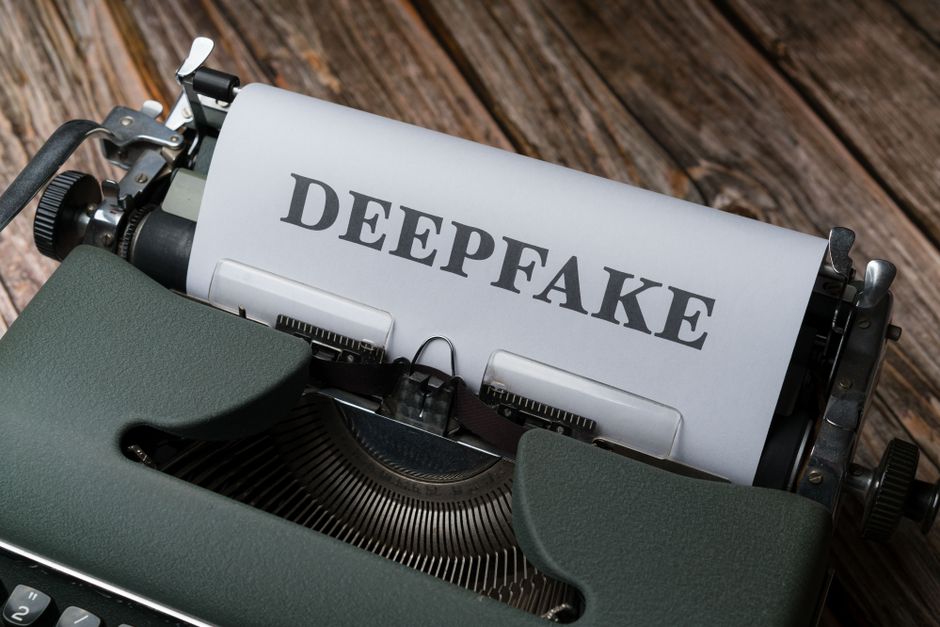
The volume problem compounds the trust problem. Language models now produce text at a scale that would have been unimaginable five years ago, and a growing share of indexed web content reflects that reality. The result is a kind of informational noise floor that makes genuinely useful content harder to find and easier to dismiss. Publishers who recognize this dynamic and respond to it deliberately are not just protecting their own brands — they are performing a service for readers who are increasingly exhausted by the alternative.
What Actually Separates Credible AI-Assisted Content From Filler
The distinction between AI-assisted content that earns trust and AI-generated content that erodes it is not primarily about disclosure labels or production ratios. It is about the presence or absence of specific qualities that readers recognize, often without being able to articulate exactly what they are responding to.
Specificity That Only Experience Can Provide
Imagine two articles about supply chain disruption in the pharmaceutical industry. The first offers a general overview of challenges, cites broad industry statistics, and concludes with generic recommendations. The second opens with a specific incident at a contract manufacturer in Ireland in early 2024, names the logistics bottleneck that caused a six-week delay, and quotes a procurement director explaining how her team adapted. Both articles might be grammatically flawless. Only one is worth reading twice. AI models trained on aggregated internet data can approximate the first article effortlessly. They cannot produce the second without a human who was actually there, or who interviewed someone who was. That gap is where editorial value lives.
A Voice That Takes Positions
Generic AI output tends toward a particular rhetorical posture: it presents multiple perspectives, acknowledges complexity, and avoids committing to anything that might alienate a segment of readers. This is not a bug in the model — it is a feature of how large language models are trained to minimize controversy. But it produces content that feels authored by no one in particular, and readers notice. A publication with a genuine editorial identity takes positions. It argues for things. It disagrees with prevailing assumptions when the evidence supports doing so. Human editors who push AI-generated drafts through that filter transform generic output into something that actually sounds like it came from somewhere.

Transparency as a Reader Relationship Strategy
Several prominent digital publishers have experimented in recent years with explicit AI disclosure formats — not just a small-print notice at the bottom of an article, but an upfront explanation of which elements were AI-assisted, what human review process the piece went through, and how readers can provide feedback. The results have been counterintuitive to those who assumed disclosure would depress engagement. In most documented cases, transparent disclosure either maintained or improved reader trust metrics. The explanation is straightforward: readers do not object to AI assistance in principle. They object to being deceived about it. Treating disclosure as a relationship-building tool rather than a legal obligation changes the dynamic entirely.
For those looking to take the next step, Become an Ultimate Master of your life is a resource worth exploring.
For those looking to take the next step, Heal your past, design your future is a resource worth exploring.
Search Engines Have Already Decided Where They Stand
Google’s quality evaluation framework, often summarized under the acronym E-E-A-T, has become the practical standard against which AI-heavy content strategies are measured — and frequently found wanting. The four dimensions the framework addresses are Experience, Expertise, Authoritativeness, and Trustworthiness. Each one presents a specific challenge for content produced primarily by AI without meaningful human input.
Why Each E-E-A-T Dimension Resists Automation
Experience, in Google’s framework, refers to direct involvement with the subject being discussed. A travel article written by someone who spent three weeks navigating the transit systems of four Japanese cities carries experience signals that a model synthesizing existing travel content cannot replicate. Expertise requires either recognized credentials or a documented track record of accurate, substantive writing in a specific domain. Authoritativeness accumulates through citations from other credible sources, professional recognition, and consistent quality over time — none of which can be manufactured quickly regardless of output volume. Trustworthiness depends on accuracy, honest sourcing, and a willingness to correct errors publicly. Automated pipelines that prioritize speed over verification consistently fail on this dimension.
The practical implication for content teams is that AI tools are most valuable when they are positioned as production accelerators rather than primary authors. A human expert who uses AI to draft an initial structure, then rewrites sections based on direct knowledge and adds original sourcing, produces content that satisfies E-E-A-T criteria. A content farm that uses AI to generate finished articles with minimal review does not — and the algorithmic consequences follow accordingly.
Technical Credibility Signals Beyond the Text Itself
Search platforms evaluate authenticity through signals that extend well beyond the words on the page. Author markup using structured data standards, bylines connected to verifiable professional profiles, consistent publication metadata, and clear editorial accountability structures all contribute to what might be called a credibility infrastructure. These elements do not compensate for low-quality content, but they reinforce the trust signals that high-quality content generates. Publishers who invest in both the editorial and technical dimensions of authenticity compound their advantages in ways that purely content-focused competitors cannot easily replicate.
Building an Editorial Workflow That Earns Trust at Scale
The challenge facing most content teams is not a lack of awareness that authenticity matters — it is a lack of practical systems for maintaining it under production pressure. The following framework addresses that gap directly.
The Expertise-First Drafting Model
Rather than beginning with an AI-generated draft and editing it toward quality, invert the process. Start with a subject-matter expert — internal or external — who provides a detailed brief, key arguments, specific examples from their experience, and any proprietary data or original research available. Feed that material into an AI tool to generate a structural draft. Return the draft to the expert for substantive revision. This sequence ensures that the content’s intellectual core comes from human knowledge, with AI serving its most appropriate function: organizing and articulating that knowledge efficiently.
Layered Review Against Defined Standards
Establish explicit quality criteria before any AI-assisted content enters your review pipeline. These criteria should include minimum requirements for original sourcing, named expert references or direct quotes, factual verification checkpoints, and voice consistency against your editorial guidelines. Assign review responsibilities to specific individuals rather than treating quality control as a collective responsibility that belongs to everyone and therefore to no one. Document the review process in a way that can be audited — both for internal accountability and as evidence of editorial rigor that can be communicated to readers when appropriate.
Disclosure Formats That Serve Readers
Develop a disclosure standard that is specific enough to be meaningful rather than generic enough to be ignored. Rather than a boilerplate statement that AI was used in content creation, consider specifying what role it played: initial research synthesis, structural drafting, headline generation, or translation. Pair that disclosure with a clear description of the human review process and a direct channel for reader feedback. This level of specificity signals genuine commitment to transparency rather than compliance theater, and readers respond to that distinction.
Ongoing Auditing and Recalibration
Content authenticity is not a standard you establish once and maintain automatically. Reader expectations evolve. Search algorithm criteria are updated. The capabilities of AI tools themselves change in ways that affect both the risks and the opportunities they present. Build a quarterly audit process into your content strategy that evaluates a representative sample of published work against your quality criteria, tracks engagement and trust metrics over time, and incorporates findings into updated editorial guidelines. Teams that treat authenticity as a dynamic practice rather than a fixed policy maintain their credibility advantages as the landscape shifts.
The Competitive Logic of Doing This Well
There is a straightforward business case for investing in AI content authenticity that does not depend on abstract appeals to editorial integrity. Audiences that trust a publisher’s content engage more deeply, return more frequently, and convert at higher rates. Search visibility that depends on genuine quality signals is more durable than visibility built on keyword optimization alone. Brand reputation built on demonstrated expertise is an asset that compounds over time, while reputation damaged by a high-profile authenticity failure can take years to rebuild — if it rebuilds at all.
The publishers who will define credible content standards in the years ahead are not necessarily those with the largest AI budgets or the most sophisticated automation infrastructure. They are the ones who understand that AI tools are only as valuable as the human judgment applied to their output — and who build their workflows accordingly. In a landscape saturated with content that was easy to produce, the content that was worth producing will always find its audience.








Leave A Comment