
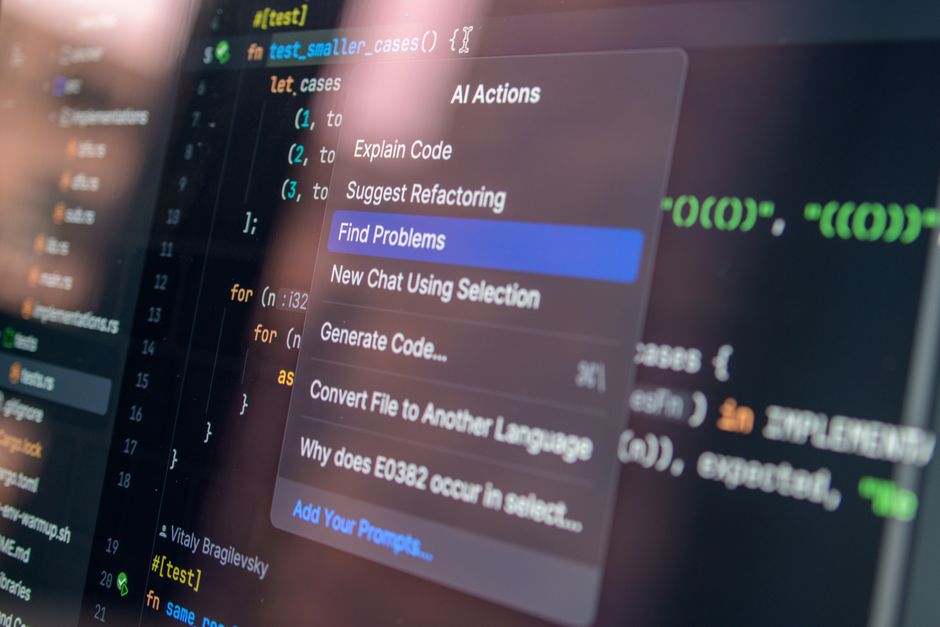
AI is rewriting production code right now — the question is whether anyone is watching.
- AI code refactoring ranges from simple inline edits to fully autonomous agentic rewrites
- Guardrails, testing loops, and human oversight are the non-negotiables for safe AI-driven changes
- Agentic AI systems can chain multiple refactoring steps without human prompting — raising both the ceiling and the risk
- IBM’s Martin Keen breaks down how development teams can harness this power without losing control
- Understanding the spectrum from assisted to autonomous is the first step every engineering team must take
The Moment a Developer Stopped Writing Code Alone
Picture a senior engineer, coffee going cold beside her keyboard, staring at 4,000 lines of legacy Java that nobody on the team fully understands anymore. Six months ago, she would have spent three weeks untangling it. Today, she types a single prompt. Within minutes, an AI agent has restructured the functions, renamed variables for clarity, eliminated redundant loops, and flagged two latent security vulnerabilities — all before she finishes her drink.
This is not a hypothetical. Development teams at enterprises worldwide are living this shift daily. According to GitHub’s 2024 developer survey, 92% of U.S.-based developers are already using AI coding tools either at work or in their personal projects. The speed of adoption is staggering. But speed without structure is how systems break in production, and that tension sits at the heart of the conversation around AI code refactoring that developer advocate Martin Keen has been driving at IBM.
What AI Code Refactoring Actually Means
AI code refactoring is the process of using artificial intelligence to restructure, clean, and improve existing source code without changing its external behavior. The goal mirrors traditional refactoring — better readability, reduced complexity, improved performance — but the execution is now machine-assisted or, increasingly, machine-led.
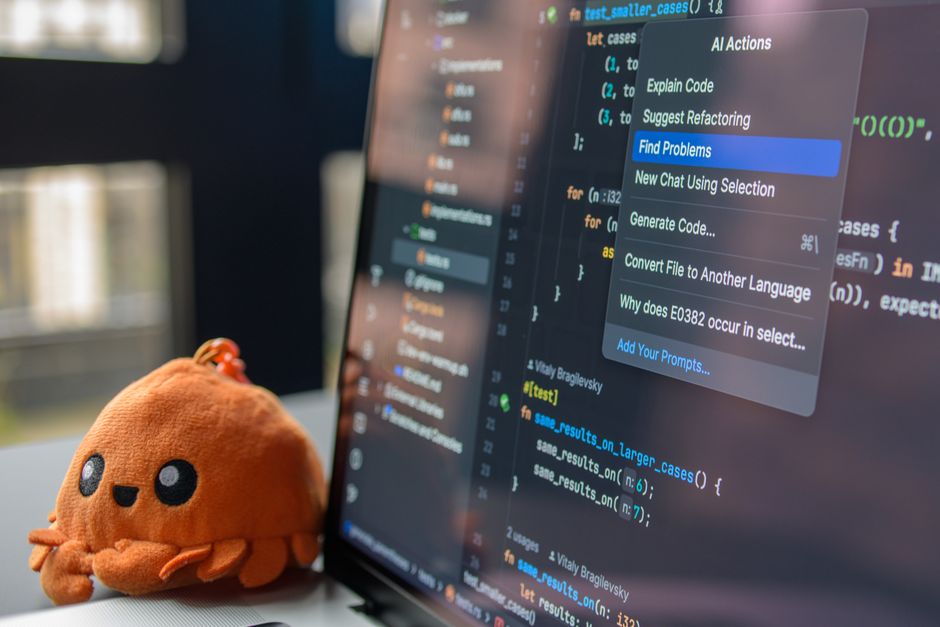
Keen draws a clear distinction between the different levels at which AI enters this process. Not all AI refactoring is created equal, and confusing the tiers is where engineering teams make expensive mistakes.
The Spectrum: From Inline Edits to Full Autonomy
- Inline suggestions: Tools like GitHub Copilot or IBM watsonx Code Assistant offer real-time, line-by-line recommendations as a developer types. The human remains in control at every keystroke.
- Prompt-driven refactoring: A developer describes a change in natural language — “extract this method into a reusable utility” — and the AI executes it across a file or module. The human reviews the diff before merging.
- Agentic refactoring: An autonomous AI agent receives a high-level objective, breaks it into subtasks, executes multiple code changes across files or repositories, runs tests, interprets results, and iterates — all without step-by-step human instruction.
That third tier is where the industry’s attention — and anxiety — is concentrated right now. Agentic systems don’t just autocomplete; they plan, act, observe outcomes, and adapt. A single prompt can trigger a cascade of hundreds of coordinated file edits. The productivity gains are real. So are the failure modes.
Why Agentic Refactoring Changes the Risk Equation
Traditional refactoring tools operated on deterministic rules. Extract a method here, rename a variable there — the scope was narrow and the outcome predictable. Agentic AI systems introduce a fundamentally different dynamic: they make judgment calls. They decide which functions to consolidate, which abstractions to introduce, and which dependencies to restructure, often across dozens of files in a single pass.
Taking the next step becomes straightforward when you have the right support — Become an Ultimate Master of your life is worth exploring.
This autonomy is precisely what makes agentic refactoring so powerful for large legacy codebases. It is also what makes oversight non-negotiable. A misaligned objective passed to an agentic system does not produce one bad line of code — it can produce thousands, all internally consistent but collectively wrong.
Common Failure Modes in Agentic Refactoring
- Scope creep: An agent tasked with improving performance in one module begins optimizing adjacent modules, introducing changes outside the intended blast radius.
- Test blindness: If the existing test suite has low coverage, the agent receives false confidence signals and ships broken logic that tests never exercised.
- Semantic drift: Variable and function renames that are locally sensible can break implicit contracts with external consumers of a library or API.
- Compounding errors: Because agents iterate autonomously, an early incorrect assumption can propagate through dozens of subsequent changes before any human reviews the output.
How Guardrails Keep AI Refactoring From Going Off the Rails
Every experienced engineer has a story about a refactor that seemed clean until it hit production. Guardrails in AI code refactoring are the structural mechanisms that prevent AI-generated changes from introducing regressions, security holes, or logic errors that human eyes might miss in a large diff.
Keen identifies several layers of protection that mature teams are building into their AI-assisted workflows. Research from McKinsey found that organizations with strong automated testing cultures catch 85% more defects before production — a figure that becomes even more critical when AI is generating the code being tested.
The Core Safety Mechanisms
- Automated test suites as a feedback loop: The AI agent runs existing unit, integration, and end-to-end tests after each change. If tests fail, the agent diagnoses the failure and attempts a corrective change before escalating to a human.
- Scope constraints: Agents are given explicit boundaries — refactor only within this module, do not modify public API signatures, do not alter database schema. Hard limits prevent well-intentioned AI from making changes with unintended blast radius.
- Human-in-the-loop checkpoints: For high-stakes changes, teams configure mandatory review gates. The agent pauses, presents a summary of what it did and why, and waits for approval before proceeding.
- Rollback-ready pipelines: Every AI-generated change is committed to version control with clear attribution. If something goes wrong post-merge, reverting is a single command rather than a forensic investigation.
- Static analysis integration: Linters, security scanners, and complexity analyzers run automatically against every AI-generated diff, catching issues that functional tests alone would miss.
Building a Guardrail Stack: What Teams Are Deploying
| Guardrail Layer | Tool Category | Primary Risk Addressed |
|---|---|---|
| Unit and integration tests | Testing frameworks | Behavioral regressions |
| Static analysis | Linters and SAST tools | Security vulnerabilities and code smells |
| Scope configuration | Agent policy settings | Unintended blast radius |
| Human review gates | CI/CD workflow controls | High-stakes logic errors |
| Version control attribution | Git and audit logs | Traceability and rollback |
The Role of Human Oversight in an Agentic World
One of the most consequential questions facing engineering leadership right now is not whether to use agentic AI for refactoring, but how to calibrate the level of human involvement. Too much oversight and the productivity gains evaporate. Too little and the risk profile becomes unacceptable for production systems.
Keen’s framework suggests that the right answer is context-dependent. A microservice with 95% test coverage and no external API consumers is a strong candidate for nearly autonomous refactoring. A payment processing module with complex regulatory requirements and dozens of downstream integrations demands frequent human checkpoints regardless of how capable the agent is.
Calibrating Oversight by Risk Level
- Low risk — high autonomy: Internal utilities, scripts, and well-tested isolated modules. Agents operate with minimal interruption; humans review final output before merge.
- Medium risk — checkpoint model: Shared libraries and services with internal consumers. Agents pause at defined milestones — after architecture changes, before any public interface modification.
- High risk — collaborative model: Customer-facing systems, financial logic, and compliance-sensitive code. Every significant change requires human review and sign-off before the agent proceeds.
What Engineering Teams Must Do Before Deploying Agentic Refactoring
The organizations seeing the best results from AI code refactoring are not the ones that moved fastest. They are the ones that invested in the infrastructure that makes speed safe. Before any agentic system touches a production codebase, engineering teams should complete a structured readiness assessment.
Pre-Deployment Readiness Checklist
- Audit test coverage across all modules targeted for AI refactoring — gaps in coverage are gaps in the agent’s safety net
- Define and document scope boundaries in agent configuration before any run begins
- Establish version control conventions that clearly attribute AI-generated commits
- Configure CI/CD pipelines to block merges that fail static analysis or test thresholds
- Identify which modules require mandatory human review and encode those rules into workflow automation
- Train engineering teams on how to read and critically evaluate AI-generated diffs — the skill of reviewing machine output is different from reviewing human-written code
li>
The Business Case: Why Enterprises Are Accelerating Adoption
Beyond the engineering arguments, there is a straightforward business case driving enterprise adoption of AI code refactoring. Legacy technical debt is one of the most expensive line items on any CTO’s balance sheet. McKinsey estimates that technical debt consumes between 20% and 40% of the value of a typical enterprise technology estate. AI refactoring tools offer a credible path to reducing that burden at a pace and cost that was previously impossible.
The productivity multiplier is significant. Development teams using AI-assisted refactoring report completing modernization projects in a fraction of the time previously required. A migration from a monolithic architecture to microservices that once took eighteen months is being executed in three to four months at organizations that have built mature AI-assisted workflows. The quality outcomes, when guardrails are in place, are comparable or better — because AI agents apply consistent style and pattern enforcement that human teams rarely sustain across large codebases.
Key Business Outcomes Reported by Early Adopters
| Outcome | Reported Impact |
|---|---|
| Time to complete legacy modernization | 50–75% reduction |
| Defect detection before production | Up to 85% improvement with strong test culture |
| Developer time spent on boilerplate and cleanup | Reduced by 30–50% |
| Technical debt remediation cost | Significant reduction versus manual approaches |
Looking Ahead: Where AI Refactoring Is Going Next
The current generation of agentic refactoring tools is impressive but early. The trajectory points toward systems that do not merely respond to refactoring requests but proactively identify degradation in code quality, propose improvement plans, and execute them on a scheduled basis — essentially continuous refactoring as a background process integrated into the development lifecycle.
Several enterprise tooling vendors are already building toward this model. The implications for how engineering teams are structured, how code review is practiced, and how technical debt is managed are profound. The teams that build strong guardrail infrastructure and calibrated human oversight processes today will be the ones positioned to absorb that next wave of capability without the associated risk.
The senior engineer with the cold coffee is not a cautionary tale. She is the early signal of a profession in transition — one where the highest-value human contribution shifts from writing every line to knowing which lines matter most, and making sure the machine gets them right.








Leave A Comment