
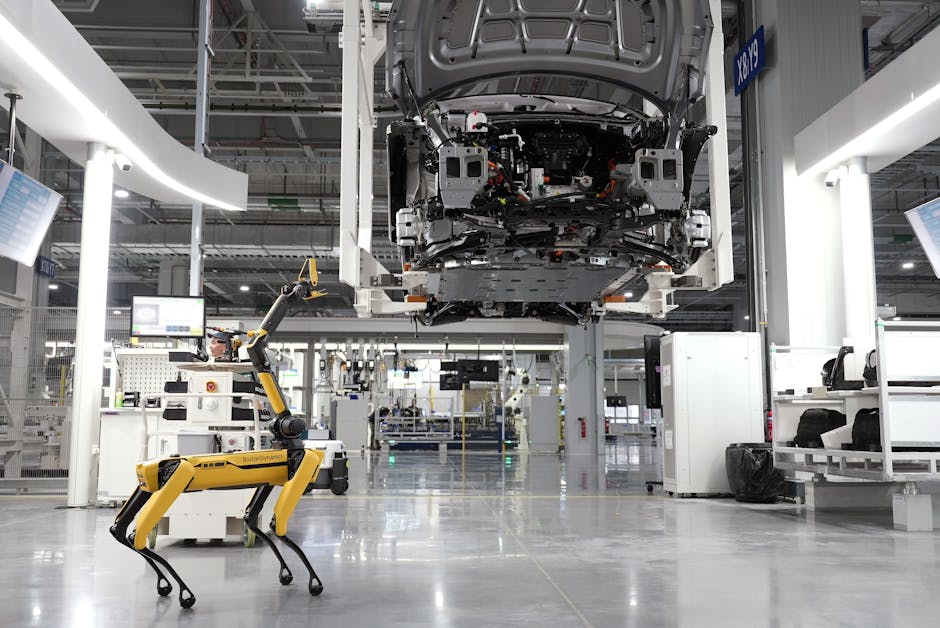
The Robot Revolution is Here: Atlas Enters Mass Production
For years, humanoid robots have captivated our imaginations, relegated to the realm of science fiction and impressive but ultimately impractical demonstrations. But the landscape is shifting dramatically. Boston Dynamics, long the poster child for cutting-edge robotics, has achieved a breakthrough: Atlas, their flagship humanoid robot, is entering serial production. And the initial 2026 production run is already sold out, signaling a seismic shift in the perception and application of humanoid robots.
The surprising twist? The company that finally unlocked the commercial potential of Atlas wasn’t a tech giant like Google or Tesla. It was Hyundai. This partnership marks a pivotal moment, transforming Atlas from a research project into a viable solution for real-world industrial applications. But how did Boston Dynamics reach this point, and why did it take a car manufacturer to make it happen?
The journey to a commercially viable Atlas was paved with challenges, setbacks, and unexpected turns. Early impetus for advanced robotics came from unexpected places. The Fukushima disaster, for example, highlighted the need for robots capable of operating in hazardous environments, spurring significant investment and research into humanoid robotics. DARPA’s Robotics Challenge further fueled innovation, showcasing the potential (and limitations) of early humanoid designs, including the first iteration of Atlas.
The path wasn’t always smooth. Boston Dynamics’ early projects, like BigDog, a quadruped robot designed for military applications, faced significant hurdles and ultimately didn’t achieve widespread adoption. These experiences, however, provided invaluable lessons in robot design, locomotion, and control.
The Google and SoftBank Stumbles
Google’s acquisition of Boston Dynamics in 2013 was initially met with excitement, but the tech giant struggled to find a clear path to monetization. Similarly, SoftBank’s subsequent ownership saw the development of Spot, a commercially successful quadruped robot, but the full potential of humanoid robots remained untapped. These ventures highlight the difficulty of translating cutting-edge robotics into sustainable business models.
Hyundai’s Secret Weapon: Automotive Actuators
Hyundai’s entry into the picture proved to be the missing piece of the puzzle. The key to Atlas’s commercial viability lies in Hyundai’s expertise in actuator technology. Actuators, the muscles of a robot, are critical for precise and powerful movement. Hyundai’s vast experience in manufacturing actuators for the automotive industry provided a significant advantage, enabling them to produce high-performance, cost-effective actuators for Atlas.
Inside the New Atlas: A Marvel of Engineering
The latest iteration of Atlas is a marvel of engineering, boasting 56 joints and 360-degree rotation capabilities. This allows for unprecedented dexterity and flexibility, enabling Atlas to perform a wide range of tasks in complex industrial environments. The robot’s intelligence is powered by advanced AI systems, including Gemini Robotics and Orbit, and is further enhanced by VR training programs, allowing workers to safely and efficiently program and control Atlas.
The Price Tag and the Promise of 24/7 Operation
While the estimated $200,000 price tag of Atlas may seem high, the promise of 24/7 operation and increased efficiency makes it an attractive investment for manufacturers. Hyundai plans to deploy Atlas in its US factory by 2028, with a goal of producing 30,000 robots per year. This large-scale deployment will provide valuable data and insights, further refining Atlas’s capabilities and paving the way for wider adoption across various industries. The convergence of automotive manufacturing expertise and advanced robotics has unlocked a new era of automation, promising to reshape the future of factory work.
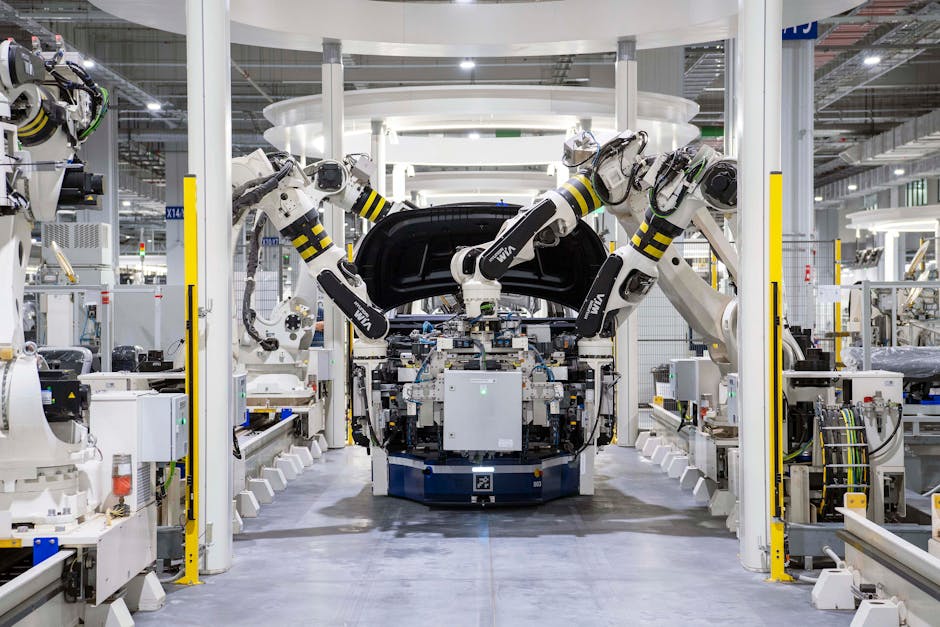
The Road to 2030: A Humanoid Robot Revolution?
Atlas’s transition from demo to industrial deployment signifies a fundamental shift in the robotics landscape. The question is no longer whether humanoid robots are coming, but how quickly they will scale and who will lead the charge. With Hyundai’s backing and a clear path to commercialization, Boston Dynamics is poised to revolutionize factory work and usher in a new era of humanoid robots. The implications are vast, potentially impacting everything from manufacturing and logistics to healthcare and disaster response. The robot revolution is no longer a distant dream; it’s unfolding before our eyes.
Atlas’s Key Capabilities
- Advanced Locomotion: Atlas can navigate complex terrains and maintain balance while carrying heavy loads.
- Dexterous Manipulation: The robot can perform intricate tasks with its hands, such as assembling components and operating machinery.
- Autonomous Operation: Atlas can operate independently in dynamic environments, adapting to changing conditions and unexpected obstacles.
Future Applications of Humanoid Robots
Beyond factory automation, humanoid robots like Atlas have the potential to transform various industries, including:
- Healthcare: Assisting surgeons, providing patient care, and delivering medications.
- Construction: Performing dangerous tasks, such as welding and lifting heavy materials.
- Disaster Response: Searching for survivors, clearing debris, and providing aid in hazardous environments.
If you want a practical next step, you can also check out Become an Ultimate Master of your life.









Leave A Comment