
The New Content Canvas: AI’s Creative Partnership
For decades, the alchemy of media creation was reserved for those with cavernous studios and large budgets. Today, that fortress has been breached. The new tools of the trade are not just cameras and editing suites, but algorithms and prompts. This seismic shift is powered by generative AI, a force multiplier that is reshaping the very DNA of content. This new technology in media is not just about efficiency; it is about expanding the realm of creative possibility for everyone from solo creators to major studios.
We are seeing this play out in real-time. AI-powered tools now assist with scriptwriting by suggesting plot points, generating dialogue, and even storyboarding scenes. In post-production, tasks that once took weeks, like rotoscoping or creating complex visual effects, can be accomplished in hours. Industry analysis shows that a majority of media companies are actively implementing generative AI in their content workflows, a figure expected to grow significantly. This shift augments human artists, freeing them from tedious labor to focus on the core of their craft: storytelling.
From Prompt to Production
The journey from a simple text prompt to a finished visual product is becoming astonishingly short. This new workflow has several key components.
- Synthetic Media Generation: Tools can create photorealistic or stylized video clips from text descriptions, providing B-roll, establishing shots, or even entire animated sequences.
- AI-Powered Editing: Software can now automatically identify the most compelling takes, cut together rough edits based on a script, and suggest musical scores that match the emotional tone of a scene.
- Hyper-Realistic Dubbing: AI can analyze an actor’s voice and speech patterns to generate seamless dubs in multiple languages, preserving the original performance while opening content to global audiences instantly.
Redefining Creative Roles
This technological infusion is not about making human creativity obsolete, but about changing its focus. Roles are evolving. The visual effects artist might now be a prompt engineer, guiding an AI to generate the perfect fantastical creature. The editor may spend less time on mundane cuts and more time on narrative pacing and emotional impact. This transition requires a new set of skills, blending artistic intuition with technical proficiency, and places a higher premium on unique vision and directorial oversight.

The Cloud-Powered Production Pipeline
While AI generates the headlines, the silent engine driving this transformation is the cloud. The days of shipping physical hard drives between production houses and distributors are fading. The new infrastructure for the media industry is decentralized, scalable, and flexible. This fundamental change has democratized access to high-end production capabilities, allowing smaller players to compete on a global stage by moving from a one-to-many broadcast model to a more direct engagement model powered by cloud infrastructure.
Taking the next step becomes straightforward when you have the right support — Become an Ultimate Master of your life is worth exploring.
Global Collaboration and Distribution
Cloud platforms provide the immense computational power needed for AI rendering and enable seamless, real-time collaboration between teams spread across the globe. An editor in Los Angeles, a colorist in London, and a sound designer in Mumbai can all work on the same project simultaneously. Once complete, this content can be uploaded once and then instantly transcoded and delivered to millions of different devices worldwide, each optimized for the best possible viewing experience. This has led to significant reductions in post-production timelines for studios that have fully embraced cloud-native workflows.
The Hyper-Personalization Engine
The modern media consumer does not just watch content; they expect platforms to know their tastes, anticipate their desires, and serve them a perfectly tailored stream of entertainment. This is the era of hyper-personalization, and its fuel is data. The most successful technology in media today is that which can understand the individual viewer on a granular level.

Understanding the Modern Viewer
Streaming services track not just what you watch, but when you watch, what device you use, and which scenes you re-watch or skip. This data informs everything from user interface design to green-lighting new productions. Furthermore, consumption habits are changing. Recent studies show younger generations, particularly Gen Z, now spend more time consuming user-generated content on social platforms than they do watching traditional movies and TV shows. This signals a massive shift that legacy media companies must adapt to, focusing on authenticity and community-driven content.
The Ethical Tightrope of Data
This data-driven approach, however, walks a fine line. As personalization becomes more precise, concerns over privacy and manipulation grow. The challenge for the industry is to leverage data responsibly and transparently. Key ethical considerations include:
- Data Privacy: Ensuring that user data is collected with consent, stored securely, and used ethically without being exploited or shared irresponsibly.
- Algorithmic Bias: Preventing recommendation engines from creating filter bubbles that limit exposure to diverse viewpoints or reinforce harmful stereotypes.
- Transparency: Being clear with users about what data is being collected and how it is being used to personalize their experience, giving them control over their information.
The Immersive Frontier: Interactive and Spatial Media
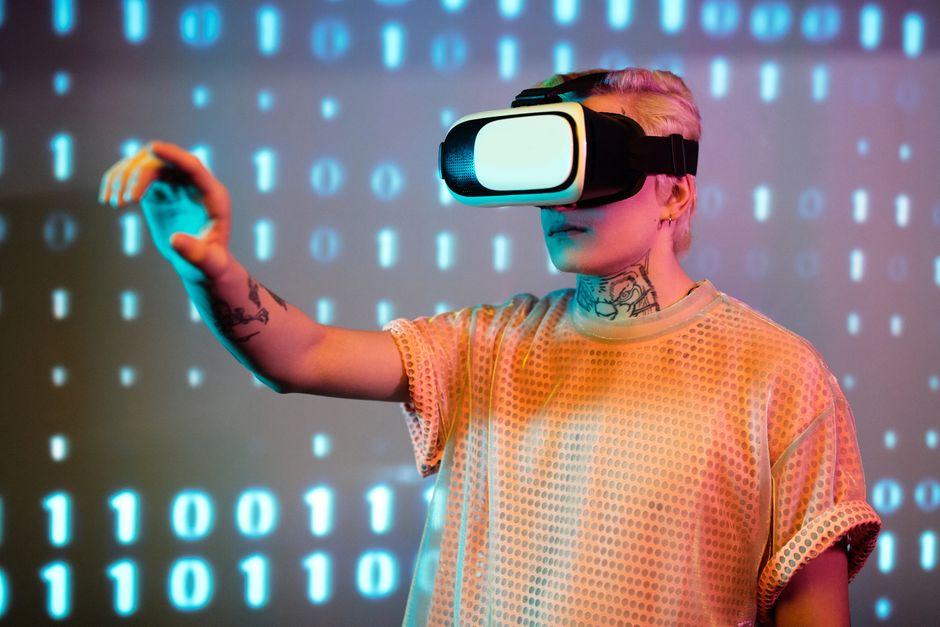
The evolution of media technology is now pushing beyond the flat screen into experiences that are interactive and immersive. Augmented Reality (AR) and Virtual Reality (VR) are no longer niche technologies but emerging platforms for a new kind of storytelling, placing the viewer directly inside the narrative.
New Dimensions in Storytelling
VR can transport audiences to new worlds, whether for an immersive documentary, a virtual concert, or a narrative game. AR, on the other hand, overlays digital information and characters onto the real world, creating interactive experiences tied to physical locations. These technologies are changing the passive nature of viewing into an active form of participation.
Navigating the Future of Media
The convergence of AI, cloud computing, data analytics, and immersive technologies is forging a new era for the media industry. The barriers to creation are falling, distribution has become global and instantaneous, and the relationship between the creator and the audience is more direct and personalized than ever before. For creators and companies alike, success in this new landscape will depend not just on mastering these tools, but on using them to tell compelling, human-centric stories that resonate in an increasingly crowded digital world. The screen is no longer the final destination; it is just the beginning.








Leave A Comment