

The Dawn of Personalized Storytelling
It was a quiet Tuesday evening when I saw it: a three-minute film trailer that felt impossibly, intimately familiar. The pacing, the musical cues, the visual style—it was as if a director had peered into my subconscious and crafted the perfect preview just for me. The truth was both simpler and more profound. An AI had analyzed my viewing history, cross-referenced it with millions of data points on narrative structure and emotional response, and dynamically assembled a trailer designed for an audience of one. This was not just targeted advertising; it was the dawn of truly personalized storytelling, a powerful example of how technology in media is fundamentally reshaping our relationship with content.
The Algorithmic Canvas: AI as Creator and Curator
The role of artificial intelligence in the media landscape has evolved from a back-office tool for data analysis into a frontline creative partner. Today’s sophisticated AI models are not just curating playlists or recommending your next binge-watch; they are actively involved in the genesis of content itself. This dual function as both creator and curator represents the most significant shift in creative workflows since the advent of digital editing. For media organizations, leveraging this dual capability is no longer optional; it is essential for survival and growth.
From Manual Edits to Autonomous Production
Generative AI is making stunning inroads into tasks once considered the exclusive domain of human artists. We see this in everything from scriptwriting assistants that can generate dialogue variations to AI-powered visual effects that can render complex scenes in a fraction of the time. According to a recent industry analysis, over 60% of media and entertainment companies are already experimenting with or implementing generative AI in their content pipelines. This integration streamlines production, reduces costs, and frees human creators to focus on higher-level conceptual work.
- Automated Transcriptions and Subtitles: AI provides near-instant, highly accurate transcriptions for video content, making it more accessible and searchable.
- Intelligent Video Editing: Systems can now automatically identify the most compelling shots in hours of footage, creating rough cuts in minutes.
- Synthetic Media Generation: AI can create realistic voiceovers, digital avatars, and even background music, dramatically lowering production barriers.
The Personalization Imperative
Beyond creation, AI’s greatest strength lies in its ability to understand and predict audience preferences with granular precision. The modern media consumer expects content that speaks directly to them. Netflix’s recommendation engine, which drives over 80% of viewer activity, is a testament to this power. The future of this technology in media lies in taking this a step further—not just recommending content, but tailoring the content itself. This could mean different endings for a drama based on viewer psychology or news reports that emphasize the angles most relevant to an individual’s interests and location.

Taking the next step becomes straightforward when you have the right support — Become an Ultimate Master of your life is worth exploring.
Beyond the Broadcast Tower: The Cloud-Native Media Revolution
For decades, the media industry was defined by physical infrastructure: broadcast towers, satellite trucks, and massive server rooms. The cloud has shattered that paradigm. The migration to cloud-native workflows is the foundational technological shift enabling the speed, scale, and global reach of modern media operations. This is not just about storage; it is about creating a decentralized, collaborative, and infinitely scalable production ecosystem. Companies that embrace this transition can innovate faster and respond to market changes with an agility their hardware-bound predecessors could only dream of. The ability to spin up a virtual post-production studio with collaborators across three continents, render a feature film using a global network of servers, and distribute it to millions of devices simultaneously is no longer science fiction. It is the new operational standard, and it is powered entirely by the cloud.
The Economics of Elasticity
This fundamental re-architecting of the media supply chain allows for unprecedented efficiency. A recent Barclays report highlights that investment in cloud infrastructure within the Technology, Media, and Telecoms (TMT) sector is projected to grow by over 20% annually. This is driven by the move from fixed capital expenditures on hardware to flexible operational expenditures on cloud services. Media companies can now scale resources up for a major live event or film rendering and scale them down immediately afterward, paying only for what they use and eliminating the cost of idle equipment.
Redefining Value: New Monetization Models
The explosion of content and platforms has led to significant subscription fatigue among consumers. This is forcing a creative rethink of how media is paid for, moving beyond the one-size-fits-all subscription model and toward a more flexible, audience-centric approach.

The Rise of FAST and Hybrid Tiers
Free Ad-Supported Streaming TV (FAST) channels and hybrid monetization models are gaining significant traction. Platforms are introducing lower-cost, ad-supported tiers to attract a wider audience that may be unwilling or unable to pay for multiple premium subscriptions. This creates new revenue streams and provides advertisers with access to highly engaged, targeted audiences within premium streaming environments, a significant evolution from traditional broadcast advertising.
From Passive Viewers to Active Participants
The line between consuming and participating is blurring. Technology is empowering audiences to move beyond the role of passive observer and become an integral part of the narrative experience itself. This shift toward interactivity is creating deeper engagement and new forms of storytelling.
Immersive and Gamified Experiences
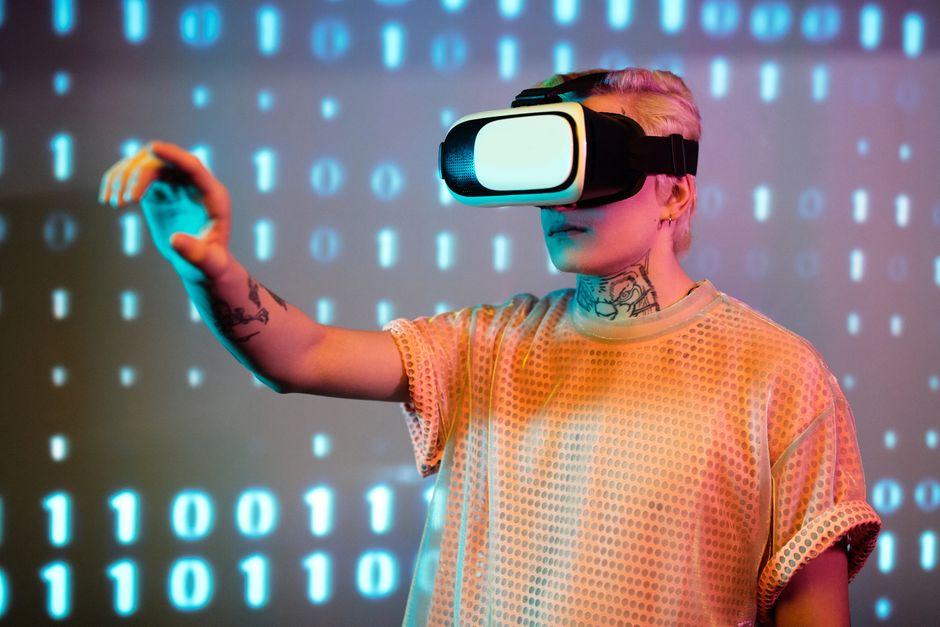
Augmented Reality (AR) and Virtual Reality (VR) are placing users directly inside the story, whether through a virtual concert or an interactive documentary. Simultaneously, principles of gamification—such as branching narratives, user choices, and progression mechanics—are being woven into traditional media formats. Experiences like Netflix’s ‘Black Mirror: Bandersnatch’ are early indicators of a future where the audience’s decisions directly shape the content they consume.
The Evolving Creative Workforce
This technological transformation demands a new kind of media professional. The siloed roles of the past are merging, giving rise to the artist-technologist—a hybrid professional who combines creative intuition with data literacy, engineering principles, and an understanding of AI systems. The most sought-after talent can now direct an algorithm as skillfully as they can direct an actor, using data to inform creative choices without being constrained by it. Roles like ‘Creative Technologist’ and ‘AI Content Strategist’ are becoming central to modern media organizations, bridging the gap between the art of storytelling and the science of technology.







Leave A Comment