
Competing Blueprints for the AI Foundation
The insatiable demand for artificial intelligence has ignited a race to build its computational bedrock. More than a simple contest for the fastest chip, this is a competition of divergent philosophies on how to best power the future of technology. From fortified, proprietary ecosystems to open-source rebellions and highly specialized custom designs, the industry’s key players are betting on fundamentally different strategies to achieve dominance in the AI hardware landscape.
The Ecosystem Fortress: Nvidia’s Walled Garden Strategy
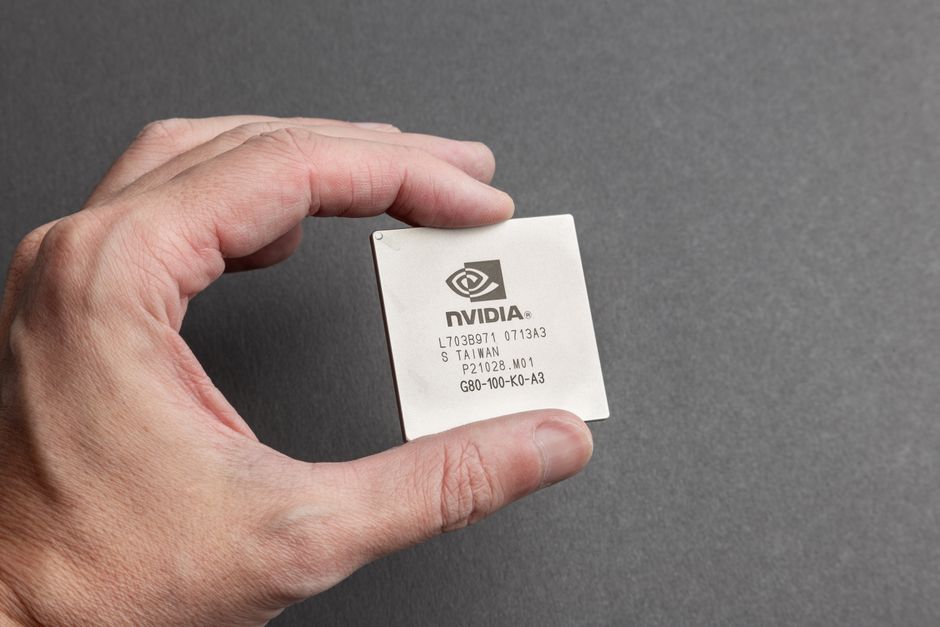
Nvidia’s current market leadership isn’t just built on powerful silicon like its H100 and B200 GPUs; it’s fortified by a deep, strategic moat of software. The company’s primary strategy is one of vertical integration and developer capture, creating a self-reinforcing ecosystem that is difficult for competitors to penetrate.
The cornerstone of this fortress is the Compute Unified Device Architecture (CUDA). For over a decade, Nvidia has cultivated CUDA from a niche programming model into the de facto language of GPU computing. By investing heavily in libraries (cuDNN), developer tools (TensorRT), and academic partnerships, Nvidia has created immense switching costs. For thousands of organizations and developers, leaving Nvidia doesn’t just mean buying new hardware; it means rewriting code, retraining staff, and abandoning a mature, reliable software stack. This makes the ecosystem, not just the chip, Nvidia’s most defensible asset.
The Open Gambit: AMD’s Alliance-Building Approach
Facing Nvidia’s entrenched position, AMD has chosen not to build a rival fortress but to lead an open rebellion. Its strategy hinges on dismantling the very idea of a single-vendor, proprietary ecosystem. The weapon of choice is the Radeon Open Compute platform (ROCm), an open-source software stack designed as a direct, hardware-agnostic alternative to CUDA.
For those looking to take the next step, Become an Ultimate Master of your life is a resource worth exploring.
For those looking to take the next step, Heal your past, design your future is a resource worth exploring.
AMD’s approach is a calculated gamble on collaboration and community:
- Fostering Open Standards: By championing open-source software, AMD aims to attract developers and partners who are wary of Nvidia’s vendor lock-in, creating a broad coalition against the market leader.
- Performance as the Great Equalizer: With accelerators like the Instinct MI300X, AMD focuses on delivering competitive raw performance, arguing that with a viable open-source software layer, hardware muscle will be the ultimate deciding factor.
- Economic Incentives: AMD positions its hardware as a powerful, cost-effective alternative, appealing to businesses looking to avoid the premium pricing associated with Nvidia’s dominant market share.
The Diversification Play: Intel’s Targeted Attack
Semiconductor giant Intel is pursuing a more nuanced, diversified strategy. Instead of engaging Nvidia in a head-to-head battle across the board, Intel is leveraging its manufacturing prowess and broad portfolio to carve out specific, high-value niches within the AI workflow.
Bifurcating the AI Workload
Intel’s strategy acknowledges that not all AI tasks are the same. It divides the market into two distinct domains:
- Specialized Training: For the intensive task of training large models, Intel offers its Gaudi line of accelerators. Acquired from Habana Labs, these processors are engineered specifically for training efficiency and scalability, presenting a purpose-built alternative to general-purpose GPUs.
- Ubiquitous Inference: For the less-demanding but higher-volume task of running trained models (inference), Intel leverages its dominant position in the data center CPU market. Its Xeon processors, equipped with integrated AI acceleration features, are positioned as the practical, efficient choice for the countless inference tasks that don’t require a full-blown GPU.
The In-House Revolution: Custom Silicon from Cloud Titans
A new strategic front has been opened not by traditional chipmakers, but by their biggest customers. Cloud service providers like Google, Amazon, and Microsoft are now designing their own custom AI chips, a trend that fundamentally reshapes the market. Their motivation is threefold: cost reduction, performance optimization for their specific software and services, and strategic independence from third-party suppliers.
- Google’s TPUs: As the pioneer, Google’s Tensor Processing Units are tailored to accelerate workloads within its own ecosystem, from Search to its Cloud AI offerings.
- Amazon’s Trainium & Inferentia: AWS has developed separate chip families, with Trainium optimized for model training and Inferentia for inference, giving its cloud customers vertically integrated hardware options.
- Microsoft’s Maia: Designed to power Azure’s large-scale AI services, Microsoft’s Maia accelerator is another example of a hyperscaler taking control of its own hardware destiny.
This vertical integration turns the biggest chip buyers into formidable competitors, creating a complex market where alliances and rivalries are constantly shifting. The future of AI hardware will likely not be a monopoly, but a mosaic of these competing strategies, each optimized for a different corner of the digital world.










Leave A Comment