
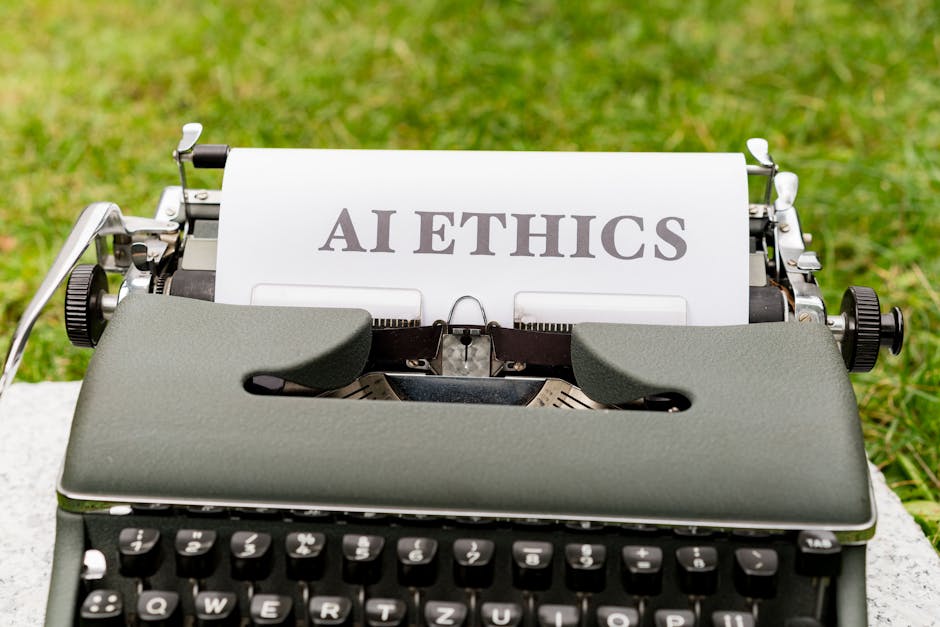
The Rise of AI in Academia: A Paradigm Shift
Artificial intelligence is no longer a futuristic concept; it’s a present-day reality deeply impacting education. While AI offers incredible opportunities to personalize learning and automate administrative tasks, it also presents significant challenges to academic integrity. The ease with which AI can generate text raises concerns about students’ genuine understanding and the validity of traditional assessment methods. Think of it like this: AI can write a song, but can it truly *feel* the music?
Redefining Learning Objectives in the Age of AI
Traditionally, education has focused on knowledge acquisition and recall. However, with AI handling information retrieval and synthesis, the emphasis must shift towards higher-order thinking skills. We need to cultivate critical analysis, creative problem-solving, and ethical reasoning. Imagine a history class where, instead of memorizing dates, students use AI to research different perspectives on a historical event, then debate its significance and long-term impact. The value lies not in the information itself, but in the students’ ability to analyze, interpret, and synthesize it.
This paradigm shift demands a proactive approach from educators and institutions. It’s not just about detecting AI-generated content; it’s about redesigning learning experiences to make them AI-resistant and, more importantly, to cultivate skills that AI cannot replicate.
Empowering Educators: Strategies for the AI-Integrated Classroom
Educators are at the forefront of this transformation, and their role is more crucial than ever. They need to:
- Establish clear guidelines on AI usage for assignments, differentiating between acceptable assistance and academic misconduct.
- Incorporate activities that demand critical thinking, such as debates, case studies, and problem-based learning scenarios.
- Design assessments that go beyond rote memorization, focusing on application, analysis, and synthesis of knowledge.
- Facilitate open discussions about the ethical implications of AI and the importance of academic integrity.
Fostering Critical Thinking in Students
Critical thinking is the bedrock of academic integrity in the AI era. Educators can promote it by:
- Challenging students to question the validity and biases of AI-generated information.
- Organizing debates and discussions where students defend their positions with evidence-based arguments.
- Assigning projects that require students to analyze and synthesize information from diverse sources, including AI-generated content.
Institutional Strategies for Maintaining Academic Integrity
Institutions must implement comprehensive strategies to address the challenges posed by AI:
- Develop clear and enforceable policies regarding AI use in academic work.
- Explore and implement AI detection tools, but recognize their limitations and avoid relying solely on them.
- Provide students with resources and training on academic integrity and responsible AI usage.
- Promote a culture of academic honesty through awareness campaigns and ethical leadership.
Rethinking Assessment: Moving Beyond Traditional Methods
Traditional exams and essays are becoming increasingly vulnerable to AI manipulation. Alternative assessment methods include:
- Oral exams and presentations where students demonstrate their understanding in real-time.
- Project-based learning where students apply their knowledge to solve real-world problems.
- In-class writing assignments and problem-solving activities that assess critical thinking skills under supervision.
- Collaborative projects that require teamwork, communication, and shared responsibility.
Conclusion: Embracing the Future of Education
The integration of AI in education is inevitable. By proactively addressing the ethical challenges and adapting our teaching and assessment methods, we can harness AI’s potential to enhance learning while upholding academic integrity. The focus must be on cultivating critical thinking, ethical reasoning, and creative problem-solving skills in students, empowering them to thrive in an AI-driven world while remaining committed to the values of academic honesty and intellectual curiosity. This is not about fighting AI; it’s about evolving with it, ensuring that education remains a meaningful and authentic experience.
If you want a practical next step, you can also check out Heal your past, design your future.
If you want a practical next step, you can also check out Become an Ultimate Master of your life.








Leave A Comment