
Why Luxury Watch Value Has Shifted Dramatically
The luxury watch market rewards those who know where to look — and punishes everyone else. Most buyers chase the wrong references, overpay at retail, and wonder why their watches never appreciate. But genuine value still exists, hiding in plain sight across specific brands, categories, and market segments that the hype machine consistently ignores.
- Value in luxury watches is not dead — it has simply migrated away from the most hyped references
- Pre-owned and discontinued models frequently offer better quality-per-dollar than current retail pieces
- Certain movement types and case materials are systematically undervalued by the broader market
- Brand perception lags behind actual quality by years, creating buying windows for informed collectors
- Knowing when to buy matters as much as knowing what to buy
The watch market between 2020 and 2022 was unlike anything seen in a generation. Grey market premiums on steel sports watches reached 200–300% above retail. Waitlists became the new currency. Then the correction came. By late 2023, the WatchCharts Overall Market Index had dropped roughly 30% from its peak, and suddenly a very different landscape emerged for buyers willing to pay attention.
This correction did not erase value — it redistributed it. Watches that were genuinely excellent but overshadowed by hype now sit at prices that make rational sense. The buyers who understand this dynamic are quietly building remarkable collections while the crowd chases the same overexposed references they always have.
How the Market Correction Changed the Landscape
- Steel sports watch premiums have compressed significantly since 2022
- Dress watch categories saw far less speculation and remain more fairly priced
- Independent brands that gained attention during the boom have seen prices stabilize at accessible levels
- The secondary market is currently a buyer’s market in most non-trophy categories
The Pre-Owned Market: Still the Smartest Entry Point
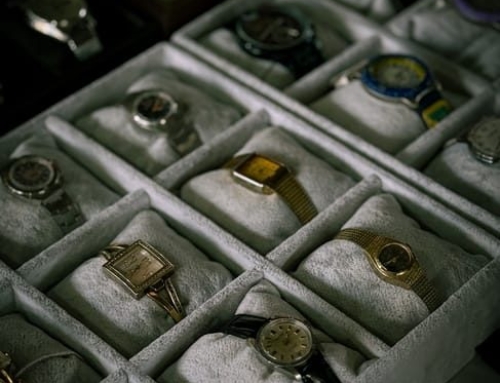
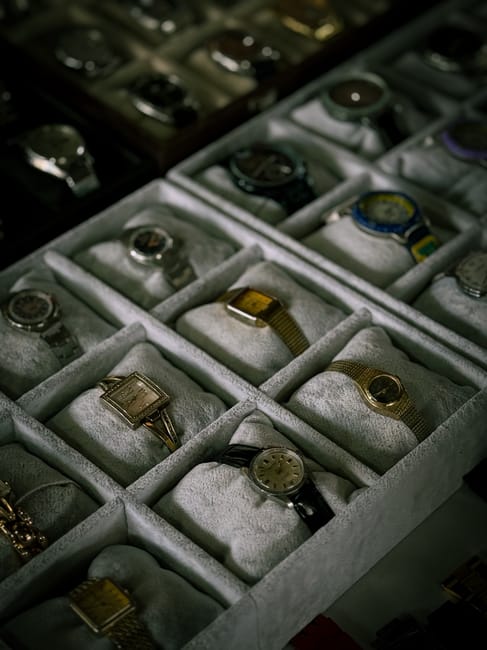
Experienced collectors have always known that pre-owned luxury watches represent the single most reliable source of genuine value. A watch loses a meaningful percentage of its retail price the moment it leaves an authorized dealer — estimates consistently place that immediate depreciation between 20% and 40% for most references outside of Rolex, Patek Philippe, and AP sports models.
That depreciation is not a warning sign. For a buyer, it is an opportunity. A five-year-old watch with full service history, original box and papers, and a verified movement is not a lesser product than a new one. In many cases it is a better-understood product, because the market has had time to assess it honestly.
Which Pre-Owned Categories Offer the Most Upside
- Swiss dress watches from the 1990s and early 2000s — a period of exceptional movement quality that the market currently undervalues
- Japanese luxury pieces — Grand Seiko aside, brands like Credor and high-end Citizen remain dramatically underpriced internationally
- Discontinued references from mid-tier Swiss houses — IWC, Jaeger-LeCoultre, and Zenith all have discontinued models that outperform their current successors mechanically
- Lightly used pieces from independent watchmakers — brands like F.P. Journe and Philippe Dufour hold value, but lesser-known independents with similar craft are available at a fraction of the price
The Pre-Owned Sweet Spot by Price Range
| Budget Range | What You Can Expect | Best Categories |
|---|---|---|
| $500 – $1,500 | Solid Swiss movements, sapphire crystals, established brands | Longines, Tissot, Mido vintage |
| $1,500 – $5,000 | In-house calibres, genuine horological craft, box and papers | JLC, IWC, Zenith discontinued |
| $5,000 – $15,000 | Complications, precious metals, independent makers | Smaller independents, vintage Patek dress watches |
In our assessment of the pre-owned market, the sweet spot consistently falls between $1,500 and $5,000. This range captures serious Swiss movements, sapphire crystals, and genuine horological craft without the premium attached to trophy-status references.
Undervalued Brands That Deserve More Attention
Brand perception in watchmaking moves slowly. A house can improve its quality dramatically over a decade and still be priced as if the old reputation holds. This lag creates buying windows. Undervalued watch brands are not obscure or low-quality — they are simply unfashionable, which is an entirely different thing.
Entry-Level Swiss Manufacture Brands
Frederique Constant and Alpina, both under the same ownership group, produce in-house movements at price points that would be impossible from a Swiss manufacture with stronger brand equity. Alpina’s Alpiner 4 Automatic, for instance, uses a manufacture calibre and retails under $1,500 — a price point where most competitors are still using ETA or Sellita movements sourced externally.
- Longines — despite recent price increases, still offers exceptional value through its L897 and L888 calibres
- Tissot PRX Powermatic 80 — the integrated bracelet trend at a fraction of luxury pricing
- Mido — consistently ignored by collectors despite sharing movement architecture with far more expensive siblings
- Frederique Constant — manufacture movements at prices that defy their complexity
Mid-Tier Houses Punching Above Their Perceived Weight
Several Swiss manufactures occupy a middle ground that the market persistently misprices. These are houses with genuine in-house production capabilities, long histories, and serious watchmaking credentials that simply lack the cultural cachet of the top tier.
- Zenith — the El Primero movement remains one of the finest chronograph calibres ever produced, and pre-owned examples are available at prices that bear no relationship to the engineering involved
- Jaeger-LeCoultre — the Reverso and Master Ultra Thin lines offer entry into genuine haute horlogerie at prices the secondary market has made surprisingly accessible
- IWC — the Portuguese and Portugieser families, particularly discontinued references, represent strong value against their original retail positioning
Movement Types the Market Is Getting Wrong
Not all mechanical movements are valued equally by the market, and the gaps between perceived and actual quality are often significant. Understanding which calibre types are systematically underpriced gives buyers a structural advantage.
Movements Worth Prioritising
- Column-wheel chronographs — more expensive to produce than cam-actuated equivalents, but frequently found in mid-market watches at prices that do not reflect the engineering premium
- Hand-wound movements — unfashionable in an era of convenience, but often thinner, more refined, and more interesting than their automatic counterparts at the same price
- Older ETA base calibres with extensive modification — the 2892 and 7750 platforms, when properly decorated and adjusted by a quality house, deliver performance that exceeds their reputation
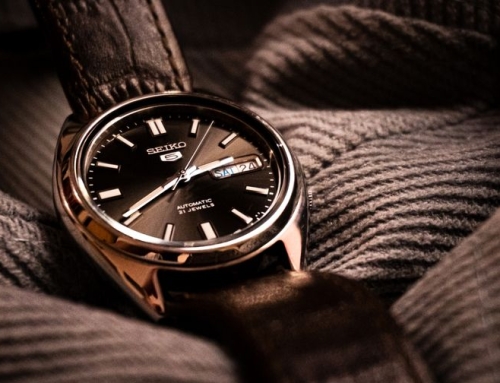
- Japanese high-frequency movements — the 36,000 vph movements found in vintage Seiko and Citizen pieces offer accuracy that modern buyers consistently overlook
What to Avoid at Current Prices
Certain movement categories carry premiums that exceed their practical or horological merit at current market prices. Tourbillons in watches under $30,000 are almost universally produced at a cost that compromises other aspects of the watch. Perpetual calendars from second-tier houses often use licensed or modified movements that do not justify the complications premium being charged.
Timing the Market: When to Buy and When to Wait
The watch market has identifiable cycles, and understanding them is as important as knowing which references to target. Buying at the wrong moment in the cycle can eliminate the value advantage of even an excellent choice.
Current Market Signals Worth Watching
- Grey market premiums on previously hot references continuing to compress through 2024
- Auction results showing softness in the $10,000 to $50,000 mid-market range
- Authorized dealers in key markets beginning to hold stock on previously waitlisted references
- Secondary market platforms reporting increased supply relative to 2021 and 2022 levels
The current environment favours buyers in almost every category outside of the very top trophy references. Patience remains the most underrated tool available to any collector. A watch bought six months after the right moment costs less than the same watch bought at the peak of attention — and the watch itself is identical.
Building a Coherent Collection Strategy
Individual watch purchases made without a broader framework tend to produce collections that lack coherence and fail to hold value as a portfolio. The collectors who consistently build strong collections approach buying as a discipline, not an impulse.
Principles for a Value-Focused Collection
- Define two or three categories of genuine personal interest before buying anything
- Set a price ceiling per piece and treat it as a hard constraint, not a guideline
- Prioritise condition and provenance over age or rarity in the pre-owned market
- Resist the urge to buy during periods of peak media coverage for any reference
- Maintain a watchlist of target references and track their secondary market prices over at least six months before purchasing
Documentation and Maintenance
Value in the pre-owned market is heavily dependent on documentation quality. Watches with original box, papers, service records, and purchase receipts command meaningful premiums over identical pieces without provenance. Maintaining your own watches to the same standard — keeping all paperwork, using authorised service centres, and retaining original components — preserves the value of your collection for future sale or trade.
Final Assessment: Where the Opportunity Actually Sits
The luxury watch market in its current state offers genuine opportunity for buyers willing to look beyond the obvious. The hype cycle has moved on from the frenzy of 2020 to 2022, leaving behind a landscape where quality is more accessible, prices are more rational, and the advantage belongs to the informed buyer rather than the fastest mover.
The references worth buying now are not secrets. They are simply unfashionable, discontinued, or attached to brands whose reputations have not yet caught up with their current quality. That gap — between perception and reality — is where value lives in any market. In luxury watches, it has rarely been wider or more accessible than it is today.
Leave A Comment