
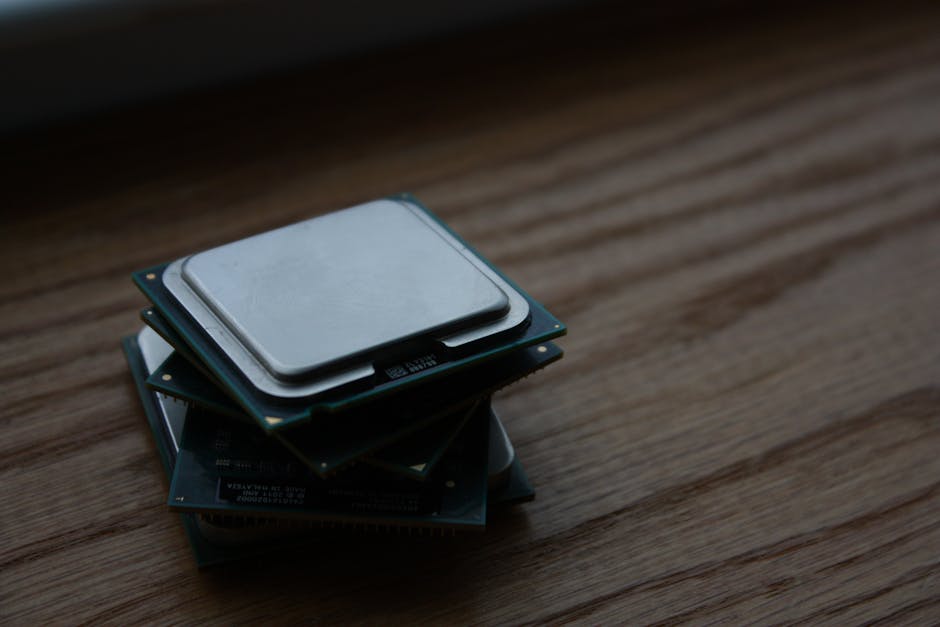
Unveiling the Inner Workings of a Microprocessor
The microprocessor, the brain of modern computing, often seems like an impenetrable black box. But beneath the surface lies a fascinating world of logic gates, registers, and control signals working in perfect harmony. This article delves into the core concepts explored in LogicWorks LAB4, offering a comprehensive breakdown of how a simplified microprocessor functions.
From Instructions to Actions: The Fetch-Decode-Execute Cycle
At the heart of every microprocessor is the fetch-decode-execute cycle. This fundamental process dictates how the processor interprets and acts upon instructions. First, the instruction is fetched from memory. Next, the instruction is decoded to determine the operation to be performed. Finally, the operation is executed, manipulating data within the processor’s registers and memory.
Understanding this cycle is crucial to grasping how software commands translate into tangible actions within the hardware. Each stage relies on intricate logic circuits that orchestrate the flow of data and control signals.
Exploring Key Components: Registers, ALU, and Control Unit
A microprocessor comprises several essential components working together:

- Registers: These are small, high-speed storage locations within the processor used to hold data and addresses.
- Arithmetic Logic Unit (ALU): The ALU performs arithmetic and logical operations on data, such as addition, subtraction, AND, OR, and NOT.
- Control Unit: The control unit orchestrates the entire operation of the microprocessor, generating control signals that govern the flow of data between registers, the ALU, and memory.
The interplay between these components is critical. For example, to add two numbers, the control unit would fetch the numbers from memory or registers, place them in the ALU, instruct the ALU to perform addition, and then store the result back in a register or memory location.
Diving Deeper: Control Signals and Timing
Control signals are the nervous system of the microprocessor, dictating the actions of each component at precise moments. These signals are generated by the control unit based on the instruction being executed and the current state of the processor.
Timing is equally crucial. The microprocessor operates according to a clock signal, which provides a rhythmic pulse that synchronizes all operations. Each instruction takes a certain number of clock cycles to complete, and the control unit ensures that each step is executed in the correct sequence and at the right time.
Building a Simplified Microprocessor in LogicWorks
LogicWorks provides a powerful environment for simulating and understanding digital circuits, including microprocessors. By building a simplified microprocessor in LogicWorks, you can gain a hands-on understanding of how the fetch-decode-execute cycle works and how the various components interact.

This process typically involves designing the control unit using finite state machines, implementing the ALU with logic gates, and connecting the registers to the data bus. Through simulation, you can observe the flow of data and control signals as the microprocessor executes instructions.
The Significance of Microprocessor Design
Understanding microprocessor design is not just an academic exercise. It provides valuable insights into the fundamental principles of computing and the limitations of hardware. This knowledge can be applied to a wide range of fields, from software engineering to embedded systems design.
Benefits of Understanding Microprocessor Design
A deeper understanding of microprocessor design can lead to several benefits:
- Improved Software Optimization: Writing more efficient code that leverages the underlying hardware.
- Enhanced Problem-Solving Skills: Developing a more analytical approach to debugging and troubleshooting complex systems.
- Innovation in Hardware Design: Contributing to the development of new and improved microprocessor architectures.
Further Exploration
Continue your journey into the world of microprocessors by exploring assembly language programming, computer architecture, and digital logic design. Each of these areas offers a deeper understanding of the complex and fascinating world of computing.
| Topic | Resource |
|---|---|
| Assembly Language | Various online tutorials and textbooks. |
| Computer Architecture | Hennessy and Patterson’s “Computer Architecture: A Quantitative Approach”. |
| Digital Logic Design | Morris Mano’s “Digital Logic and Computer Design”. |
If you want a practical next step, you can also check out Become an Ultimate Master of your life.









Leave A Comment