

The Digital Quill: How AI is Rewriting the Rules of Journalism
Imagine a world where news breaks faster, is more data-driven, and reaches a wider audience than ever before. This isn’t a futuristic fantasy; it’s the reality that Artificial Intelligence (AI) is rapidly creating in journalism. But with this technological leap comes a critical question: How do we ensure that AI enhances, rather than erodes, the ethical foundations of news reporting?
Unleashing AI’s Potential: A Double-Edged Sword
AI offers incredible opportunities. Picture AI-powered tools sifting through mountains of financial data to uncover insider trading, or instantly translating news reports into multiple languages for global audiences. Think of algorithms that personalize news feeds to deliver the most relevant information to each individual reader. This allows journalists to focus on what they do best: crafting compelling narratives, holding power accountable, and fostering informed public discourse.
However, the same technology presents significant challenges. Consider an AI trained on biased historical data that perpetuates stereotypes in crime reporting, disproportionately targeting minority communities. Or imagine ‘deepfake’ videos, generated by AI, used to spread disinformation and undermine trust in credible news sources. The increasing reliance on AI demands careful consideration of transparency, accountability, and the very essence of journalistic integrity. We must navigate this evolving landscape with caution and foresight.

Ethical Pillars in the Age of AI Journalism
Successfully integrating AI into journalism requires a proactive approach to ethical considerations. Key areas of focus include mitigating bias, ensuring transparency, establishing clear accountability, and maintaining robust human oversight. These pillars are essential to harnessing AI’s potential while safeguarding the core values of journalism.
Combating Bias: Ensuring Fair and Accurate Reporting
As previously stated, AI algorithms learn from data, and biased data leads to biased outputs. For example, if an AI is used to identify potential news stories by analyzing social media trends, and the training data is skewed towards certain demographics or viewpoints, the AI may overlook important stories that affect underrepresented communities. Addressing this requires diverse and representative training data, bias detection algorithms, and continuous monitoring of AI outputs to identify and correct any discriminatory patterns. Think of it like this: if you only feed an AI information about cats, it won’t be able to recognize a dog.
Transparency and Explainability: Shedding Light on the Algorithm
Journalism thrives on transparency, and this principle must extend to AI. News organizations should clearly disclose when and how AI is being used in their reporting processes. Furthermore, AI systems should be explainable, meaning that their decision-making processes should be understandable to humans. This is especially critical when AI is used to generate news content or make editorial decisions. Imagine a scenario where an AI flags a politician’s statement as potentially misleading. The news organization should be able to explain why the AI reached that conclusion, citing the specific data and algorithms used. A lack of transparency can breed distrust and make it impossible to hold AI systems accountable.
Human Oversight: Maintaining Journalistic Integrity
While AI can automate tasks, it should never replace human judgment. Journalists must retain ultimate responsibility for the accuracy, fairness, and ethical implications of news content. This requires establishing clear lines of accountability and equipping journalists with the skills and resources to critically evaluate and oversee the work of AI systems. For example, a journalist might use AI to generate a first draft of a news article, but then meticulously fact-check the information, add context and analysis, and ensure that the article adheres to journalistic standards. News organizations should also develop clear policies for addressing errors or biases in AI-generated content, ensuring that corrections are made promptly and transparently.
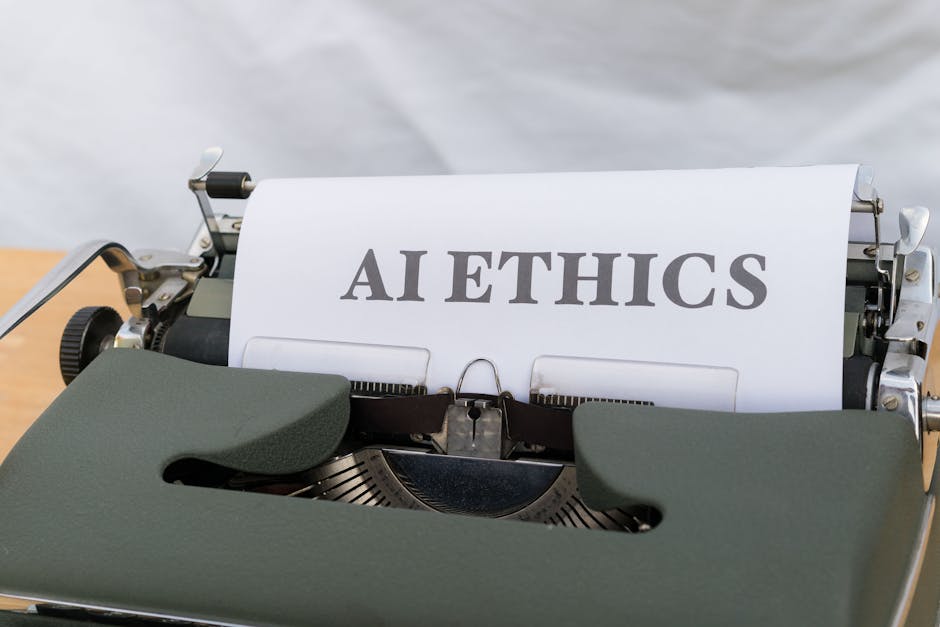
A Future of Collaboration: Humans and AI Working Together
The future of journalism hinges on a collaborative partnership between humans and AI. AI can handle data analysis, content generation, and distribution, freeing up journalists to focus on in-depth reporting, investigative journalism, and community engagement. By embracing transparency, accountability, and human oversight, news organizations can leverage the power of AI to create a more informed, engaged, and equitable public sphere. The key is to view AI as a tool to enhance journalistic values, not a replacement for them. It’s about using technology to amplify the human element, not diminish it.
If you want a practical next step, you can also check out Get the best book with practical guides on digital communication essentials.
If you want a practical next step, you can also check out Become an Ultimate Master of your life.








Leave A Comment