
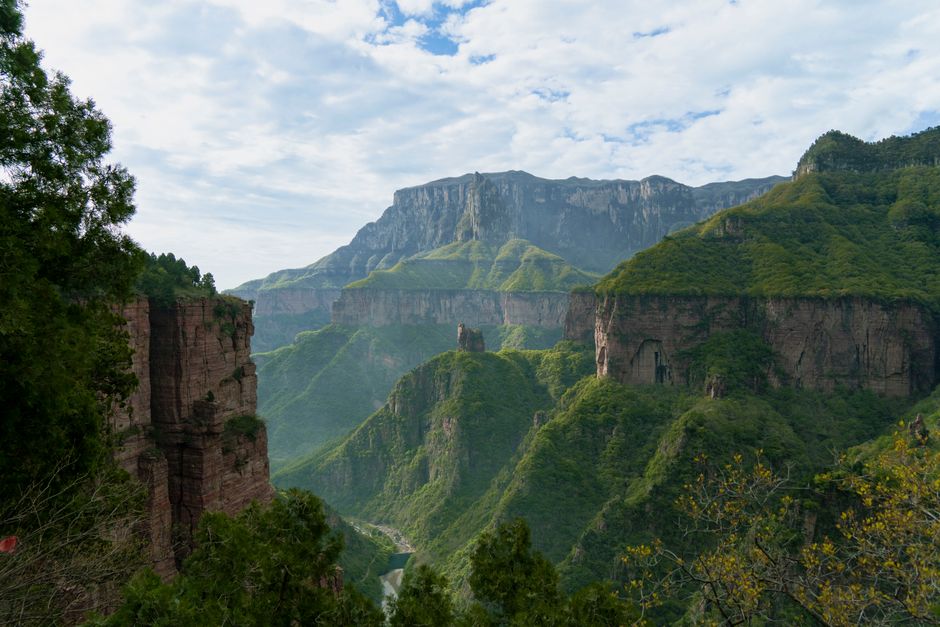
Some places stop you cold. Shahe Mingfang does exactly that — a village so quietly magnificent it feels like the Taihang Mountains kept it secret on purpose.
- Key Takeaways:
- Shahe Mingfang is a remarkable cultural and natural destination nestled in the Taihang Mountain range of Hebei Province, China.
- The village earns its nickname ‘Pearl of Taihang’ through a rare combination of ancient architecture, dramatic canyon scenery, and living folk traditions.
- Visiting requires intentional planning — the reward is an experience that mass tourism has not yet diluted.
- The journey itself, through winding mountain roads and terraced landscapes, is as meaningful as the destination.
- Travelers who approach this region with curiosity and patience consistently describe it as transformative.
Where the Taihang Mountains Keep Their Secrets
Shahe Mingfang sits tucked into the dramatic folds of the Taihang Mountain range, a geological spine that runs along the border of Hebei and Shanxi provinces in northern China. The Taihang range stretches roughly 400 kilometers and rises to elevations exceeding 2,000 meters in places, creating one of the most visually arresting landscapes in all of East Asia. Mingfang — whose name translates poetically as ‘Bright Fragrance’ — occupies a valley position that channels both river light and mountain shadow in ways that photographers and painters have chased for generations.
The region around Shahe City has long been considered a transitional zone, where the flat North China Plain collides with the ancient uplift of the Taihang plateau. That collision produced not just dramatic cliffs and gorges, but also a cultural mixing point where agricultural lowland traditions met the hardy, self-reliant customs of mountain communities. Villages like Mingfang became repositories of both — places where terraced fields cling to impossible slopes and stone courtyard homes have weathered centuries of wind and war.
- The Taihang range contains over 100 designated scenic areas and geological parks.
- Hebei Province alone hosts more than 3,000 traditional villages, but fewer than 200 carry national heritage protection status.
- Mingfang’s position along a river tributary gives it both agricultural fertility and visual drama rarely found in combination.
The Geology Beneath the Beauty
Understanding Shahe Mingfang requires understanding the rock beneath it. The Taihang Mountains are composed primarily of Precambrian metamorphic and sedimentary formations, some dating back more than 2.5 billion years. Tectonic uplift combined with millions of years of river erosion carved the deep gorges and sheer cliff faces that define the region’s visual character today. The blue-grey limestone so prominent in local architecture is the same stone that forms the canyon walls — a seamless continuity between natural landscape and human settlement that few regions in the world can match.

Seasonal water flow has further sculpted the valley floor, depositing rich alluvial soils that allow agriculture to thrive at elevations where farming would otherwise be impossible. This geological generosity — dramatic scenery above, fertile soil below — explains why human communities chose this specific valley and have remained here for millennia.
- The Taihang gorge system is considered one of China’s most significant geological heritage zones.
- Limestone formations in the area contain fossil records spanning multiple geological eras.
- Erosion patterns visible in the canyon walls tell a readable story of climate change across deep time.
The Architecture That Time Forgot to Demolish
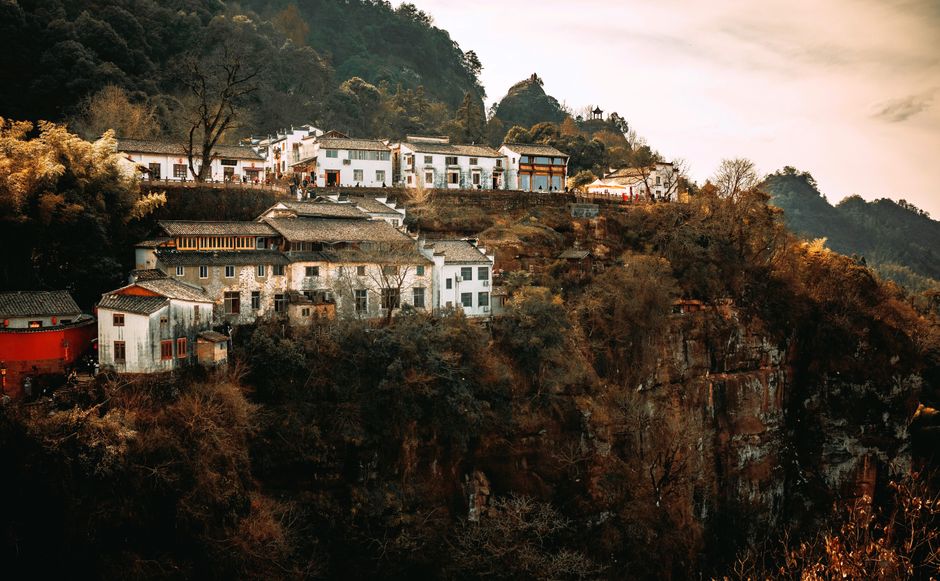
Walk into Mingfang’s older quarters and the first thing you notice is the stone. Traditional Taihang stone architecture dominates here — dry-laid walls of blue-grey limestone, courtyard gates worn smooth by ten thousand passing hands, and roof lines that follow the contour of the hillside rather than fighting it. This is not a reconstructed heritage village. The bones are original.
Chinese architectural historians estimate that authentic pre-20th-century stone village clusters of this integrity represent fewer than 5% of surviving traditional settlements in northern China. Most were modified, abandoned, or demolished during the rapid urbanization of the 1980s and 1990s. Mingfang’s relative geographic isolation — the very thing that made it economically marginal for decades — became its accidental preservationist.
Reading the Stones: What the Buildings Tell Us
Each courtyard compound in Mingfang follows a spatial logic refined over centuries. The main hall faces south to capture winter sun. Side wings house extended family or livestock depending on the household’s wealth. Carved stone lintels above doorways carry auspicious characters — blessings for harvests, for sons, for longevity. Many of these carvings date to the Qing dynasty, making them 200 to 300 years old and still legible to anyone who reads classical Chinese.
- Courtyard orientation follows feng shui principles adapted for mountain topography.
- Local limestone was quarried from the gorge walls within walking distance of the village.
- Some family compounds show evidence of continuous habitation across six or seven generations.
Construction Techniques Passed Through Generations
The craft knowledge embedded in Mingfang’s older buildings represents a living technical tradition. Dry-stone walling of the quality found here demands an intimate understanding of how individual stones interlock under compression — knowledge that cannot be learned from a manual and takes years of apprenticeship to master. Local builders historically selected stones by sound as much as by sight, tapping each piece to gauge its density and fracture risk before placing it in a load-bearing wall.
For those looking to take the next step, Become an Ultimate Master of your life is a resource worth exploring.
Roof construction presented its own challenges at this elevation. Traditional Taihang roofs use a shallow-pitch design that sheds snow efficiently while minimizing wind resistance during the fierce winter storms that sweep down from the plateau. Timber roof members were sourced from specific valley forests, seasoned for years before use, and fitted with joinery techniques that allow slight movement without structural failure — an elegant engineering solution developed long before modern materials science could explain why it works.
- Master stone masons in the Taihang tradition typically trained for a minimum of seven years before working independently.
- Specific quarry sites used by village builders can still be identified in the gorge walls today.
- Roof timber joinery in surviving Mingfang structures shows regional variations distinct from lowland Hebei building traditions.
The Water Element: River, Mill, and Memory
Water defines Mingfang as much as stone does. The river tributary that runs near the village powered grain mills for centuries, and the sound of moving water is a constant presence in the older neighborhoods. Stone-lined irrigation channels — some still functional — trace routes that village elders can map from memory, recalling which family built which section and why. This hydraulic knowledge, passed orally through generations, represents a form of intangible heritage as precious as any carved lintel.
- Traditional water mill technology in the Taihang region dates back at least to the Tang dynasty (618–907 CE).
- Several mill structures in the Shahe area have been documented by regional ethnographers as functionally intact examples.
- Seasonal flooding historically shaped both the village layout and the agricultural calendar.
The Pearl Metaphor: Why This Place Earns Its Name
Locals and travelers alike have long called Mingfang the Pearl of Taihang, and the metaphor holds up under scrutiny. A pearl forms through the slow accumulation of layers around a single point of irritation — beauty produced by pressure and time. Mingfang is similar. Centuries of geographic isolation, economic hardship, and cultural persistence have produced something of concentrated, almost implausible loveliness: a place where landscape, architecture, and living tradition have fused into a coherent whole that no single element could achieve alone.
The name Mingfang itself — Bright Fragrance — points toward a quality that resists easy description. It is not the grandeur of a famous mountain or the spectacle of a UNESCO monument. It is something quieter and more durable: the accumulated presence of generations of human effort applied intelligently to a specific and demanding landscape.
- The ‘Pearl of Taihang’ designation appears in regional travel literature dating back at least to the early Republican period.
- The name Mingfang is associated in local oral tradition with a specific flowering plant that blooms along the gorge walls each spring.
- Several contemporary Chinese painters have cited Mingfang as a primary source of inspiration for landscape work.
Living Folk Traditions and Intangible Heritage
Mingfang’s significance extends well beyond its physical fabric. The village remains a living community, and that living quality is precisely what distinguishes it from a preserved ruin or a reconstructed theme park. Festivals tied to the agricultural calendar still bring the community together in ways that have changed little across generations. Music, textile traditions, and food practices specific to this valley have survived not through institutional intervention but through the simple fact that people here continued to use them.
Seasonal Festivals and Community Ritual
The rhythm of the year in Mingfang is marked by celebrations that blend formal religious observance with practical agricultural necessity. Spring planting festivals involve communal rituals at a village temple whose foundation stones predate the current structure by several centuries. Harvest gatherings in autumn bring extended families back from cities where younger generations now work — a pattern repeated across rural China, but particularly vivid here where the landscape itself seems to demand acknowledgment.
- The village temple complex has been in continuous ceremonial use for over 400 years according to local genealogical records.
- Traditional percussion ensembles specific to the Shahe valley maintain repertoires not found in lowland Hebei communities.
- Textile dyeing techniques using locally sourced plant materials are still practiced by a small number of elder craftswomen.
Food Culture as Cultural Memory
Mountain food traditions in the Taihang region developed in response to specific agricultural constraints. Millet, sorghum, and various drought-resistant grains formed the dietary backbone for centuries, and the recipes built around them carry the logic of scarcity and ingenuity in equal measure. Fermented grain products, preserved vegetables, and stone-ground flours produced in traditional mills remain central to local cooking in a way that is increasingly rare in modernizing rural China.
Visitors who share a meal with a Mingfang family often describe the experience as unexpectedly moving — not because the food is elaborate, but because each dish connects visibly to the landscape outside the window. The grain grew on those terraces. The vegetables came from that garden. The water came from that river. The directness of that connection is something urban life has largely severed, and encountering it intact carries a weight that is difficult to articulate and easy to remember.
- Stone-ground millet flour from the Shahe valley has been recognized in regional culinary heritage surveys.
- Traditional fermentation practices in Taihang villages show continuity with methods documented in Ming dynasty agricultural texts.
- Several Mingfang households have begun hosting meal experiences for visitors as a sustainable income supplement.
Getting There: Planning a Meaningful Visit
Reaching Shahe Mingfang requires deliberate effort, and that effort is part of what the experience offers. The village is accessible from Shahe City, which sits on rail lines connecting to both Shijiazhuang and Handan. From Shahe City, mountain roads wind upward through a series of increasingly dramatic gorge sections before arriving at the valley settlements. The drive itself — typically one to two hours depending on conditions — passes through landscapes that justify the journey independently of the destination.
Practical Considerations for Visitors
Seasonal timing matters considerably. Spring brings the flowering of gorge-wall plants that gave the village its name, along with the greening of terraced fields and high water in the river. Autumn offers the most dramatic color, with deciduous trees on the upper slopes turning against the grey limestone in combinations that photographers find difficult to leave. Winter visits are possible but require preparation for road conditions and limited local services. Summer brings the most visitors and the fullest agricultural activity, but also heat and occasional flash flood risk in the lower gorge sections.
| Season | Highlights | Considerations |
|---|---|---|
| Spring | Gorge wildflowers, terraced field planting, high river flow | Road conditions variable after winter; some paths muddy |
| Summer | Full agricultural activity, maximum greenery, festivals | Heat, higher visitor numbers, flash flood risk in gorge |
| Autumn | Harvest festivals, dramatic foliage color, clear skies | Most popular season; accommodation books quickly |
| Winter | Snow on stone architecture, minimal crowds, stark beauty | Some roads close; limited local services available |
Responsible Visitor Conduct
Mingfang’s preservation depends partly on how visitors choose to engage with it. The village is a living community, not a museum, and the residents who remain are the custodians of everything that makes the place worth visiting. Asking permission before entering courtyard spaces, purchasing directly from local producers rather than outside vendors, and limiting group sizes when walking the older lanes are practices that make a measurable difference to how sustainable tourism develops here.
- Several community-based guesthouses operated by local families offer accommodation that directly supports village residents.
- Guided walks led by village elders provide historical context unavailable from any written source.
- Photography of residents should always be approached with explicit permission and genuine courtesy.
Why Shahe Mingfang Matters Beyond Tourism
The case for Shahe Mingfang is ultimately a case for a certain kind of place in a world that produces fewer of them each decade. It is a place where the relationship between human community and natural landscape has been worked out over centuries into something coherent and instructive. Where building traditions encode accumulated knowledge about how to live well in a specific environment. Where folk practices carry memory that no archive has captured. Where the pace of life still allows the kind of attention that modern urban existence systematically discourages.
These qualities have value that extends beyond any individual visitor’s experience. They represent alternatives — proven, tested, lived alternatives — to ways of organizing human settlement and community that are currently failing at scale. Preserving places like Mingfang is not nostalgia. It is the maintenance of a library whose books have not yet been fully read.
- Rural heritage villages in the Taihang region have become subjects of serious academic study in sustainable architecture and community resilience.
- Several international conservation organizations have identified the Taihang gorge village clusters as globally significant cultural landscapes.
- The economic model emerging around responsible cultural tourism in villages like Mingfang offers a replicable framework for other marginal rural communities across northern China.










Leave A Comment